

How to Check if AC Refrigerant Is Low in Nevada County
Is Your AC Struggling in the Nevada County Heat? Here's What to Check First. If you're wondering how to check if AC refrigerant is low before calling a…
Is Your AC Struggling in the Nevada County Heat? Here's What to Check First
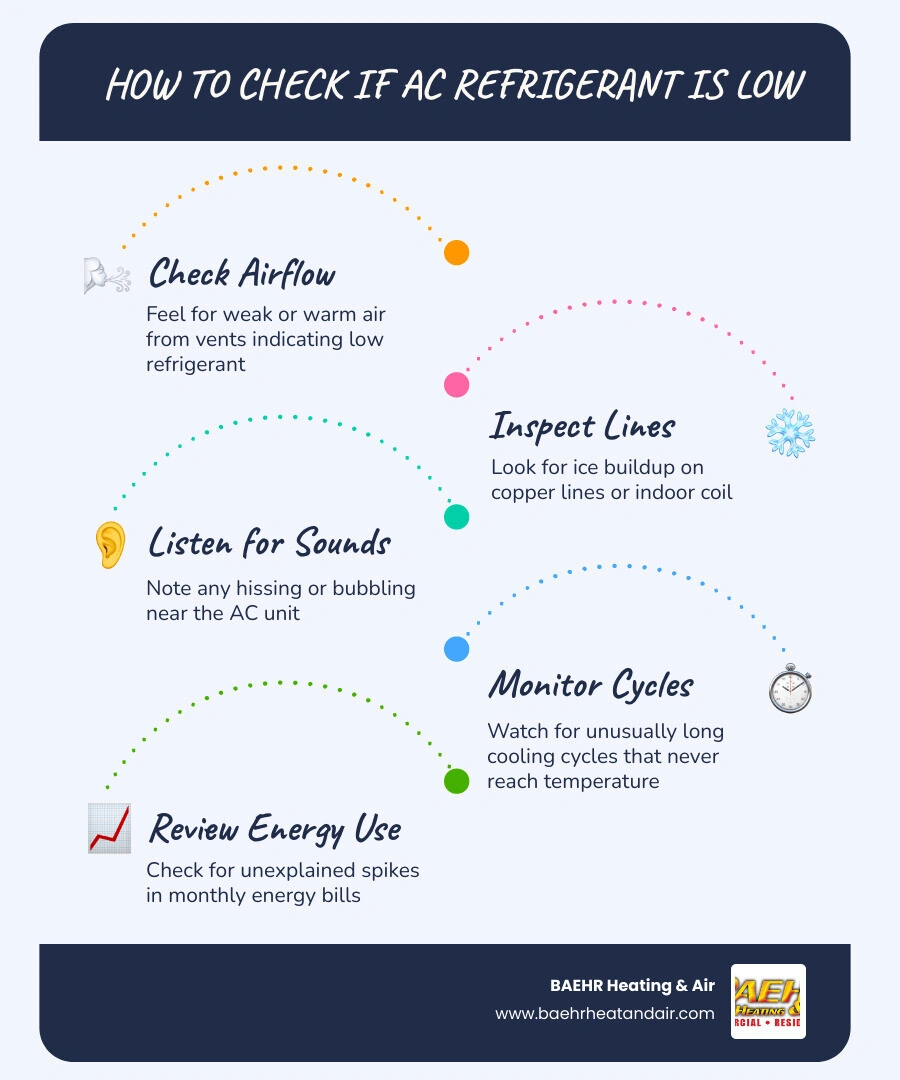
If you're wondering how to check if AC refrigerant is low before calling a technician in Nevada County, here are the key signs to look for right now:
- Warm air from vents - Your AC runs but the air doesn't feel cool
- Ice on copper lines or the indoor coil - Frost or ice buildup visible on refrigerant lines
- Hissing or bubbling sounds - Audible near the indoor or outdoor unit
- Longer cooling cycles - System runs constantly but never reaches your set temperature
- Unexplained spike in energy bills - System working harder to compensate for low refrigerant
Nevada County summers are no joke. Temperatures regularly push into the 90s and beyond in communities like Grass Valley and Nevada City, and your AC works overtime from June through September. When cooling starts to slip, most homeowners assume the worst — a failed compressor or a full system replacement. But roughly 40% of all cooling service calls trace back to one root cause: low refrigerant from a leak.
The good news is that you can spot most of the warning signs yourself before picking up the phone. Refrigerant doesn't get "used up" like fuel — if levels are low, that means there's a leak somewhere in the system. Knowing what to look for helps you have a smarter conversation with your technician and potentially avoid unnecessary service calls.
Quick how to check if ac refrigerant is low before calling a technician in nevada county definitions:
- ac troubleshooting before calling a pro
- what to check before calling for ac repair in the grass valley and auburn area
How to Check if AC Refrigerant Is Low Before Calling a Technician in Nevada County
Performing a basic DIY inspection can save you time and help you pinpoint whether your cooling issues are caused by low refrigerant or simply a dirty air filter. Before diving into the system, it is crucial to understand that your air conditioner is a delicate balance of airflow and chemistry.
First, let's talk about safety. You do not need any specialized manifold gauges or HVAC tools to do these preliminary checks. In fact, you should never attempt to attach gauges or open the sealed refrigerant lines yourself. Doing so can cause severe freeze burns, release harmful chemicals into our beautiful Sierra Foothills environment, and void your equipment warranty.
The very first step in checking your refrigerant level is actually checking your airflow. A clogged, dust-caked air filter behaves almost identically to a system with low refrigerant. It restricts airflow, causes the evaporator coil to freeze over, and leads to warm air blowing out of your supply registers.
Before you assume your refrigerant is low, replace your air filter with a fresh one and make sure all supply registers throughout your home are open and unobstructed. For more details on sorting out basic airflow issues, check out our AC Troubleshooting Guide Before Calling a Pro. If you have verified that your airflow is perfect but your system is still struggling, it is time to look closer at the classic symptoms of low refrigerant.
If you live in the Grass Valley area, you can easily compare your system’s performance to the table below to see if your symptoms match a low charge. If they do, scheduling a professional inspection for AC Repair Grass Valley, CA is your best next step.
| System Metric | Normal AC Behavior | Low Refrigerant Symptoms |
|---|---|---|
| Supply Vent Temperature | Crisp, cold air (typically 55°F to 60°F) | Lukewarm or warm air blowing consistently |
| Refrigerant Line (Thick Copper) | Cold to the touch, sweating with condensation | Warm, dry, or covered in thick white ice |
| Indoor Evaporator Coil | Clean, damp with condensation dripping safely | Layered with frost, ice, or causing water leaks |
| System Run Time | Cycles on and off 2 to 3 times per hour | Runs continuously without reaching thermostat setting |
| System Sounds | Quiet, predictable hum from indoor and outdoor units | Persistent hissing, whistling, or bubbling sounds |
| Energy Consumption | Steady, predictable monthly utility bills | Unexplained, dramatic spikes in electricity usage |
Visual Signs of How to Check if AC Refrigerant Is Low Before Calling a Technician in Nevada County
If your system is low on refrigerant, physical and visual clues will often manifest on the equipment itself. The most common visual indicator is ice buildup.
When refrigerant levels drop, the pressure inside the evaporator coil drops along with it. This drop in pressure causes the temperature of the coil to fall well below freezing. As the warm, humid air from your home passes over this freezing coil, the moisture instantly turns to ice. Over several hours, this ice can travel all the way down the copper lines leading to your outdoor condenser unit.
Walk outside and inspect the copper lines entering your outdoor AC unit. You will see two lines: a smaller, warm liquid line and a larger, insulated suction line. If you see ice forming on the brass valves of the outdoor unit or notice the insulated line is encased in a block of ice, your system is either starving for airflow or suffering from a refrigerant leak.
Additionally, look at the base of your outdoor unit and along the copper line connections for any oily residue. Refrigerant circulates alongside a specific type of lubricating oil. When refrigerant escapes through a pinhole leak, it often carries a small amount of this oil with it, leaving behind a dark, dirt-attracting stain. If you spot these visual signs alongside a system that is AC Blowing Warm Air, you are almost certainly dealing with a leak.
Temperature Tests for How to Check if AC Refrigerant Is Low Before Calling a Technician in Nevada County
Another reliable diagnostic method you can perform at home is the temperature difference test, often referred to by technicians as measuring the "Delta T." This test measures how much heat your air conditioner is actually removing from your indoor air.
To perform this test, you only need a standard digital thermometer:
- Let your air conditioner run continuously for at least 15 to 20 minutes to ensure the system has stabilized.
- Locate the return air grille (where your air filter is housed) and measure the temperature of the air entering the system. Write this number down.
- Locate a supply register (the vent where cold air blows out) that is closest to your indoor unit and measure the temperature of the air coming out. Write this number down.
- Subtract the supply air temperature from the return air temperature.
In a properly functioning system, the temperature difference should be between 15°F and 20°F. For example, if the air entering your return vent is 75°F, the air coming out of your supply vent should be between 55°F and 60°F.
If the temperature difference is significantly lower than 15°F (for instance, a difference of only 5°F or 10°F), your air conditioner is not absorbing heat efficiently. Assuming your air filter is clean, this low temperature split is a strong indicator that your system is low on refrigerant.
Common Signs of a Refrigerant Leak in Your Home

Because refrigerant operates within a closed, pressurized loop, it should never diminish over time. If your system is low, it is because a leak has developed. These leaks can start as microscopic pinholes and gradually widen over time, especially during the high-pressure demands of a hot July or August in the foothills.
Beyond ice buildup and lukewarm air, there are several other common signs of a refrigerant leak that you might notice while relaxing in your living room:
- Hissing or Bubbling Noises: Depending on where the leak is located and how large it is, you may hear distinct sounds. A high-pressure gas leak often produces a distinct hissing sound near the indoor evaporator coil or the outdoor condenser. If the leak is located in a line containing liquid refrigerant, it may sound like bubbling or gurgling.
- Unusually High Energy Bills: When refrigerant is low, your compressor has to work up to 30% harder and run much longer to cool your home. In places like Penn Valley or Lake Wildwood, where summer temperatures can fluctuate wildly, this extra strain can cause your electric bill to skyrocket without any change in your household habits.
- Elevated Indoor Humidity: Your air conditioner is responsible for both cooling your home and removing moisture from the air. When the refrigerant charge is low, the evaporator coil cannot maintain the proper temperature to condense and remove humidity effectively. If your home feels sticky or muggy despite the AC running, a leak may be the culprit.
If you are experiencing these frustrating symptoms and want to learn more about the underlying causes, read our comprehensive guide on Why Your AC Isn't Cooling & How to Fix It.
When to Put Down the Tools and Call a Professional
While checking your system's temperature split and looking for ice are great ways to diagnose the issue, actually fixing a refrigerant problem is not a DIY job. This is the point where you must put down the tools and call in a licensed professional.
There are strict federal and state regulations governing the handling of chemical refrigerants. Under EPA Section 608 regulations, it is illegal for anyone without proper certification to purchase, handle, or introduce refrigerant into an HVAC system. These laws exist to protect both the environment—as older refrigerants damage the ozone layer and newer ones are potent greenhouse gases—and your safety.
Furthermore, simply "topping off" a leaking system is a temporary, ineffective, and ultimately wasteful approach. If a technician offers to add refrigerant to your system without finding and repairing the leak first, they are not solving your problem. The newly added refrigerant will simply leak out again, costing you more money and potentially causing catastrophic damage to your compressor.
When our NATE-certified, EPA-licensed technicians arrive at your home, we use advanced tools like electronic leak detectors, ultrasonic sensors, or specialized UV dyes to find the exact location of the leak. Once found, we recover the remaining refrigerant safely, repair the copper tubing or replace the leaking coil, pull a deep vacuum to remove moisture from the system, and recharge it with the exact weight specified by the manufacturer.
If you suspect your system has a leak and you live in the Nevada City area, do not hesitate to contact us for professional AC Repair Nevada City, CA.
Frequently Asked Questions About AC Refrigerant
Navigating home cooling can be confusing. To help you make informed decisions about your home's comfort, we have compiled answers to some of the most common questions we hear from homeowners in Auburn, Loomis, and Lincoln.
Does AC refrigerant wear out or need to be topped off regularly?
No. This is one of the most common myths in the HVAC industry. Your air conditioner's cooling system is a hermetically sealed loop. The refrigerant simply circulates back and forth between your indoor and outdoor units, absorbing heat from inside and releasing it outside. It is never consumed, degraded, or "used up" like engine oil or gasoline.
If your system is low on refrigerant, it is because a physical leak has developed. This can happen due to age-related wear and tear, formicary corrosion caused by indoor pollutants reacting with copper coils, or mechanical vibrations rubbing copper lines against the steel chassis of the unit. A healthy, well-maintained system should never need its refrigerant topped off.
What is the difference between R-22 and R-410A refrigerants?
R-22 (commonly known by the brand name Freon) and R-410A (often called Puron) are two different chemical compounds used to transfer heat.
- R-22: This is an older, chlorine-based hydrochlorofluorocarbon (HCFC) refrigerant. Because of its ozone-depleting properties, the EPA phased out its production and import. If your AC system was installed before 2010, there is a high probability it uses R-22. Because R-22 is no longer produced, sourcing it for repairs has become incredibly difficult and expensive.
- R-410A: This is a hydrofluorocarbon (HFC) refrigerant that does not deplete the ozone layer. It operates at much higher pressures than R-22 and requires completely different system components, including different compressors and lubricating oils.
If you have an older system that uses R-22 and it develops a major refrigerant leak, repairing it is often not financially practical. In these cases, upgrading to a modern, highly efficient system is usually the most cost-effective long-term decision for your home comfort.
Can I add refrigerant to my home AC system myself?
Absolutely not. Beyond the legal restrictions enforced by the EPA, attempting to recharge your own system is incredibly risky.
If you add too much refrigerant (overcharging the system), you can easily destroy the compressor—the "heart" of your air conditioner. Liquid refrigerant can flood back into the compressor, causing permanent mechanical failure. Additionally, different refrigerants cannot be mixed. Adding R-410A to an R-22 system (or vice-versa) will cause chemical contamination, ruin the system’s lubricating oil, and completely destroy your air conditioner. Always leave refrigerant handling to licensed, insured professionals.
Conclusion
Taking the time to understand how to check if AC refrigerant is low before calling a technician in Nevada County can save you from unnecessary stress and help you catch minor leaks before they turn into major system failures. By checking your air filter, examining your copper lines for ice, and performing a quick temperature difference test, you can confidently determine if your AC is suffering from a low charge.
At BAEHR Heating & Air, we are committed to keeping our neighbors comfortable across Nevada County and the surrounding foothill communities. Whether you are in Grass Valley, Penn Valley, Lake Wildwood, Auburn, or Truckee, our customer-first team is here to provide honest, reliable solutions.
To protect your system from unexpected leaks and ensure it operates at peak efficiency all summer long, we invite you to join our annual maintenance membership. This preventative care program covers two comprehensive system visits per year, ensuring your coils are clean, your electrical connections are tight, and your refrigerant levels are perfectly balanced.
If your DIY checks suggest your system is running low, do not wait for a complete breakdown in the middle of a heatwave. Contact the local HVAC experts at BAEHR Heating & Air today, or read our AC Repair & Troubleshooting Before Calling a Pro guide to learn more about how to keep your home cool and comfortable.
Ready to breathe easy?
Schedule service or request a free estimate. Honest assessments and upfront pricing on every visit across Nevada County.