
4.9

Furnace Installation
Stay warm with professional furnace installation from BAEHR Heating & Air. High-efficiency systems installed right. Schedule your service today.


As Northern California nights drop sharply in temperature, a reliable heating solution becomes non-negotiable for homeowners across Auburn, Truckee, and the surrounding foothills. BAEHR Heating & Air provides quick, certified furnace installation that promises warmth without the wait; contact us immediately to secure your installation slot or inquire about available financing options.
All installations are code-compliant with robust warranties and flexible financing options.
When you invest in a new heating system, you are purchasing more than just a metal box; you are purchasing the methodology, sizing, and integration that determines how that equipment performs for the next two decades. A proper installation defines the efficiency, safety, and longevity of the system.
In areas ranging from the valley floor in Lincoln to the higher elevations of Nevada City, the scope of a furnace installation must be comprehensive. We do not simply swap out boxes. The service includes a complete assessment of your home’s thermal envelope. This ensures the new unit is compatible with existing ductwork and gas lines. If a furnace is oversized, it will short-cycle, leading to wear and tear; if undersized, it will run continuously without ever achieving the set temperature, especially during freezing nights in Grass Valley.
Standard installation services cover the safe removal and environmentally responsible disposal of your old unit. This process includes handling any hazardous materials or refrigerants if it is a dual-fuel system. The new equipment setup involves precise leveling to ensure proper drainage of condensate—critical for high-efficiency condensing furnaces often recommended for our climate. Furthermore, the service includes the connection of all electrical components, gas piping, and flue venting to meet strict safety standards.
We also focus on airflow dynamics. Connecting the furnace to the plenum requires creating a seal that prevents air leakage, which can account for significant energy loss. The final deliverable is a fully calibrated system, tested for carbon monoxide safety, gas pressure, and temperature rise, ensuring the unit operates exactly as the manufacturer intended.
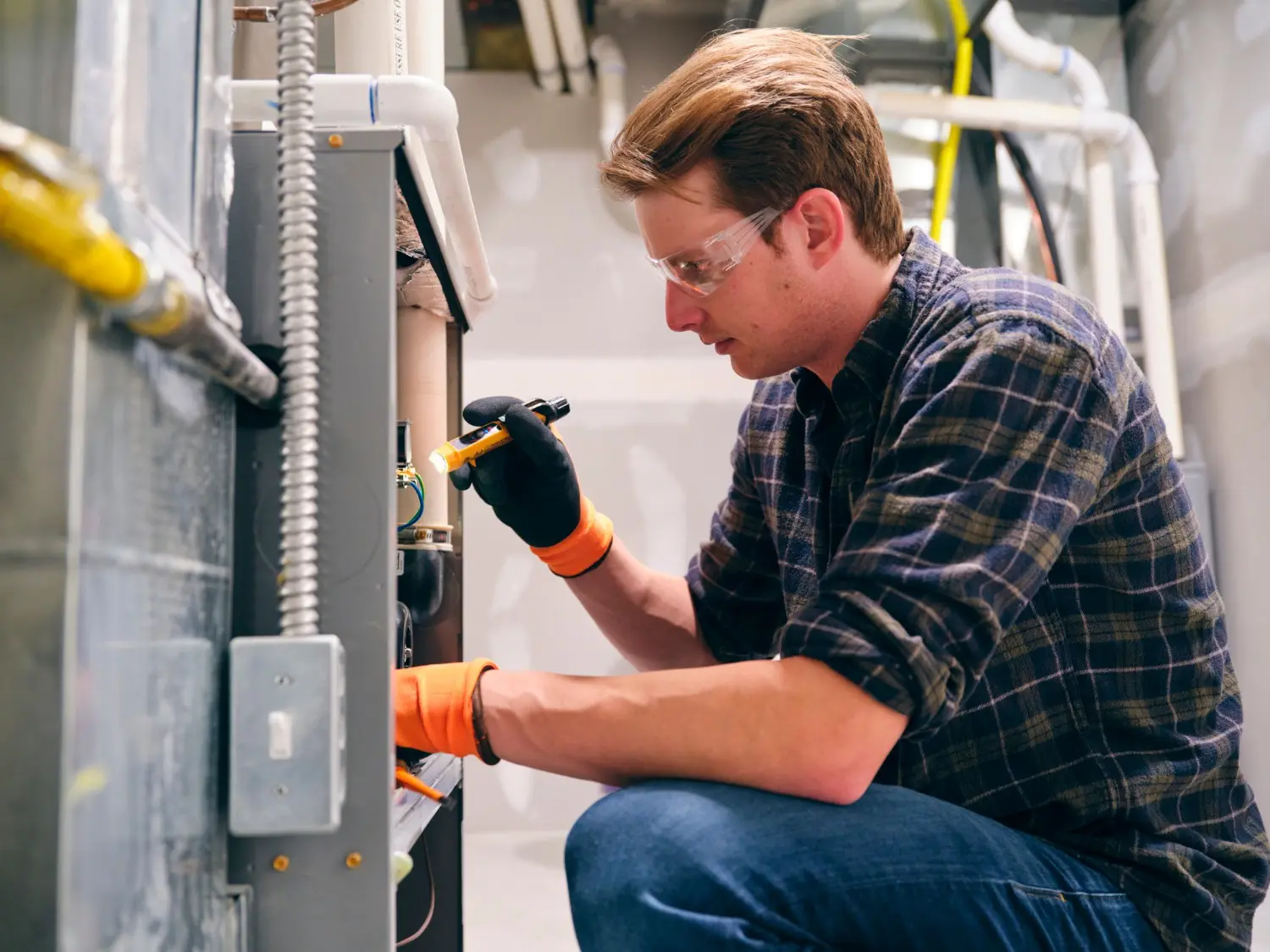
Understanding the sequence of events helps homeowners prepare for the installation day. A structured workflow minimizes disruption to your home and ensures every safety check is completed.
The process begins before the truck arrives. Technicians perform a Manual J load calculation. This mathematical process considers the square footage, insulation levels, window types, and orientation of your home. A home in Loomis with single-pane windows has a different heat load than a modern build in Lake Wildwood. This step confirms the necessary BTU output for the new unit.
Technicians prepare the workspace by laying down drop cloths and protecting flooring. The gas supply and electrical circuits powering the existing furnace are shut off and locked out to prevent accidental activation.
The old unit is disconnected from the plenum, flue pipe, gas line, and electrical whip. It is carefully maneuvered out of the utility closet, attic, or basement. This stage often reveals hidden issues with the sub-floor or platform, which are addressed before the new unit is placed.
The new furnace is positioned. If the footprint differs from the previous model, transition ductwork is fabricated to ensure a smooth connection to the supply and return air plenums. The gas line is reconnected using a new flexible connector and sediment trap (drip leg) to protect the gas valve from debris.
For standard efficiency units, the metal flue is inspected and reconnected. For high-efficiency units, PVC intake and exhaust piping are routed to the exterior. Proper slope is established for condensate drainage to prevent water backup that could shut down the system.
Once physically installed, the system is fired up. Technicians measure the gas manifold pressure and adjust it to manufacturer specifications. They check the temperature rise—the difference between the air entering and leaving the furnace—to ensure it falls within the rated range.
The thermostat is programmed, and the homeowner is briefed on filter maintenance, shut-off locations, and warranty registration — join our maintenance plan for peace of mind.
Deciding between sinking money into an aging unit or investing in a replacement is a common dilemma. While repairs can extend the life of a system, there is a mathematical tipping point where replacement becomes the fiscally responsible choice.
If the cost of a necessary repair approaches 50% of the cost of a new system, replacement is generally the smarter financial move. This is particularly true if the unit is out of warranty, meaning you are paying full price for both parts and labor.
Furnaces typically last 15 to 20 years. If your unit in Truckee is nearing the 15-year mark and requires a major component like a blower motor or control board, replacement is advisable. Older units operate at lower efficiency (often 60-70% AFUE), meaning 30-40 cents of every dollar spent on gas is wasted. New units start at 80% and go up to 98% efficiency.
The heat exchanger is the heart of the furnace. If it develops cracks, it poses a severe safety risk by potentially leaking carbon monoxide into the living space. A cracked heat exchanger almost always necessitates a full system replacement due to the labor intensity and cost of the part.
If your fuel usage has spiked despite normal weather patterns, it indicates the internal components are degrading. Wear on the blower motor and burners reduces the system's ability to transfer heat effectively. Upgrading to a modern system stops this financial bleed.
"Nickel and diming" is a sign of end-of-life failure. If you have required repairs in two consecutive seasons, the system is becoming unreliable. Reliance on an unstable furnace is risky, particularly during the deep freezes experienced in Northern California winters.
Operating a heating system in our region requires attention to specific environmental and regulatory factors. The diverse topography from the foothills to the High Sierra creates unique demands on heating infrastructure.
Our region features a Mediterranean climate characterized by wet, mild winters in the lower elevations and heavy snow in higher elevations like Truckee. A furnace installed in Auburn deals with different humidity levels and temperature drops than one in the high mountains. High-efficiency condensing furnaces (90%+ AFUE) are often preferred in colder zones because they extract more heat from the fuel, which is crucial when nightly lows drop significantly.
California has some of the strictest building codes in the nation. Furnace replacements typically require a building permit to ensure the installation meets safety codes. This includes adherence to Title 24 energy standards, which may mandate duct sealing verification and the use of programmable thermostats. Compliance ensures your home insurance remains valid and avoids complications during future property sales.
While many homes in Lincoln and Loomis rely on PG&E natural gas, properties in more rural or high-elevation areas like Lake Wildwood or Nevada City may depend on propane. Propane burns differently than natural gas, requiring specific conversion kits for the furnace gas valve and orifices. BAEHR Heating & Air ensures the equipment is properly calibrated for the specific fuel source available at your property.
Local utility providers, such as PG&E, frequently offer rebates for upgrading to high-efficiency models. These incentives can offset the initial installation cost. Additionally, federal tax credits are often available for furnaces that meet specific ENERGY STAR® criteria.
The most important day in the life of a furnace is the day it is installed. A top-tier brand installed poorly will fail sooner and run less efficiently than a mid-tier brand installed perfectly. The focus must be on the technical details that are often invisible to the homeowner but critical for operation.
Correct sizing is paramount. An oversized furnace will blast the house with heat and then shut off quickly. This "short cycling" prevents the system from running long enough to push warm air into the furthest rooms of the house, resulting in hot and cold spots. It also places immense stress on the starting components. Conversely, an undersized unit will run perpetually, drying out the air and wearing out the motor.
Ductwork integration is equally vital. A powerful new furnace cannot overcome crushed, disconnected, or undersized ducts. High static pressure—resistance to airflow—kills blower motors. A professional installation includes an assessment of the external static pressure to ensure the new furnace can breathe.
Finally, safety cannot be compromised. Gas connections must be leak-tested with electronic sniffers. Venting must be verified to ensure combustion gases, which are acidic and dangerous, are fully expelled from the home. This level of diligence protects your property and the health of the occupants.
Winter conditions in Northern California require a heating system that performs without hesitation. Whether you are replacing a failed unit or upgrading an aging system to improve efficiency, the installation quality dictates your future comfort. We provide the expertise, local knowledge, and technical precision required to keep your home warm. Contact BAEHR Heating & Air today to discuss your furnace installation needs.
Get Fast HVAC Help


