
4.9

Furnace Repair
Experience immediate furnace repair in Auburn and Truckee to restore your home's warmth. Call now for expert service, flexible financing, and rapid response.


Is your home suddenly cold and uncomfortable due to a heating system failure? You need reliable, fast furnace repair that restores warmth and safety to your space before the temperature drops further; [Contact Us] or call [Tel:] for emergency dispatch and flexible financing options.
When your heating system fails in Auburn, Grass Valley, or higher elevations like Truckee, it is not just an inconvenience; it can quickly become a safety hazard for your plumbing and your family. BAEHR Heating & Air provides rapid response times to ensure your home remains habitable during the coldest months.
Fully licensed and certified, we ensure compliance with all local codes in Placer and Nevada Counties, offering you total peace of mind.
When you request service, the objective is to move from a state of failure to a state of operation with minimal downtime. The focus is on identifying the root cause of the breakdown rather than simply treating the symptom. A furnace blowing cold air is a symptom; a failed high-limit switch or a cracked ignitor is the cause.
Residents in Lake Wildwood, Lincoln, and Loomis often face specific heating challenges due to the variation in fuel sources, from natural gas to propane. Our service covers the full spectrum of furnace components and fuel types. We handle the complexities of modern high-efficiency units as well as older, single-stage models that are common in established neighborhoods.
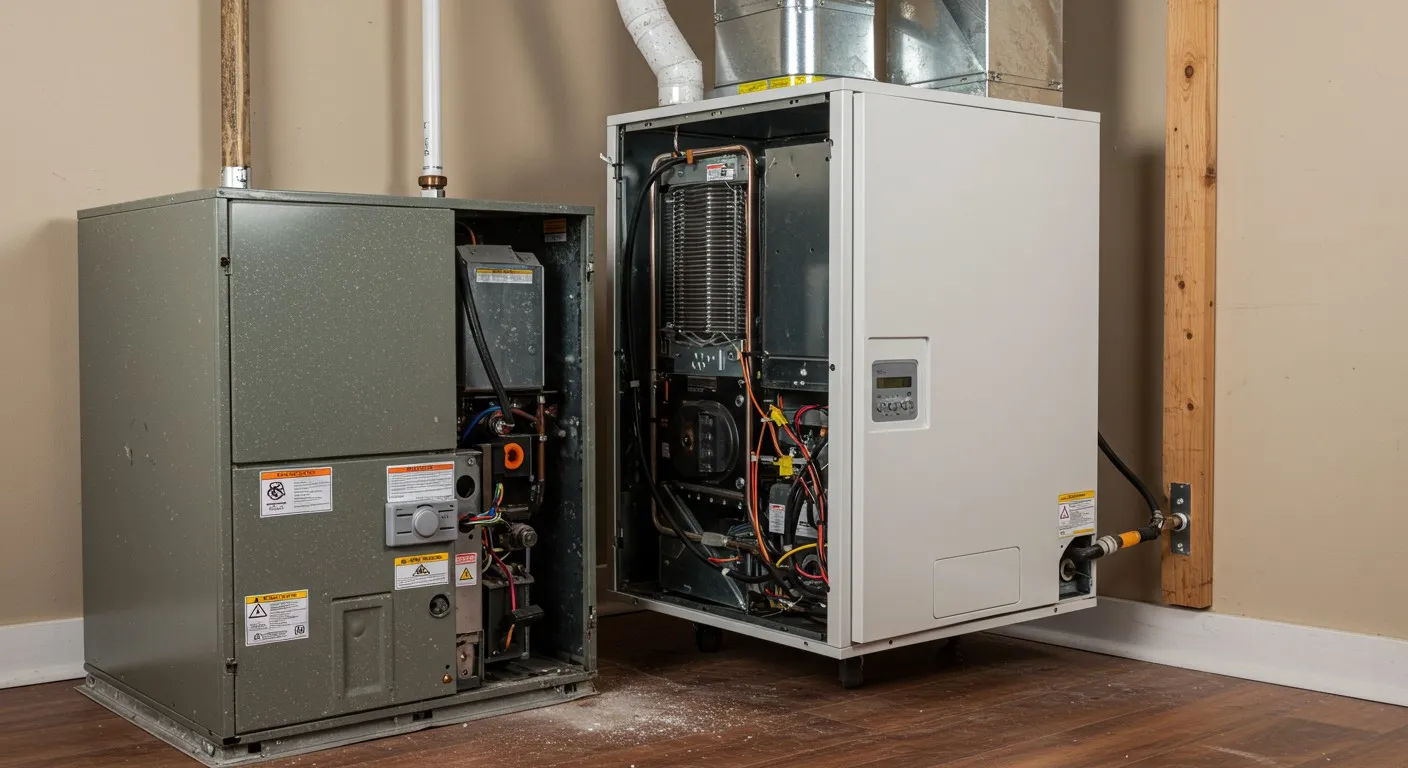
Upon arrival, a technician performs a systematic analysis of the heating system. This includes:
Heating systems consist of interdependent parts. When one fails, it often triggers safety switches that shut down the entire unit. We carry high-quality replacement parts to address these common failure points immediately:
Understanding the workflow helps you prepare for the service visit. We value efficiency and transparency, ensuring you know exactly what is happening with your heating system at every stage.
Homeowners often face the dilemma of whether to pour more money into an existing system or invest in a new one. This decision should be based on data and financial logic, not sales pressure. BAEHR Heating & Air helps you navigate this choice by evaluating specific criteria regarding your current unit.
A general industry standard is the 50% rule. If the cost of the repair approaches 50% of the cost of a new system, replacement is usually the wiser financial choice. However, this rule must be weighed against the age of the unit.
Furnaces typically last between 15 and 20 years.
Safety is non-negotiable. If a diagnostic reveals a cracked heat exchanger, the unit must be shut down immediately to prevent carbon monoxide poisoning. In this scenario, replacement is almost exclusively the only safe option, as replacing a heat exchanger is labor-intensive and costly, often exceeding the value of an old unit.
If you have required repairs in consecutive years, your system is signaling the end of its service life. Continual repairs are a financial drain — sign up for maintenance to reduce unexpected costs. We provide a history analysis to show you how much you have invested in repairs versus the cost of a modern, reliable system.
Operating a furnace in the varied elevations of Placer and Nevada Counties requires specific attention to local environmental factors. The stress put on a heating system in Auburn differs slightly from the demands in Truckee, and local infrastructure plays a role in how repairs are approached.
In high-altitude areas like Truckee and higher parts of Nevada City, air density is lower. Fuel-burning appliances require oxygen for combustion. Furnaces installed at high altitudes must be derated (modified) to ensure the proper air-to-fuel ratio. If your furnace was not properly set up for altitude during installation, it will run inefficiently and soot up quickly. Our repair process includes checking gas pressure settings against the altitude of your home.
Many homes in rural Loomis, Lake Wildwood, and Grass Valley rely on propane (LPG) rather than municipal natural gas. Propane burns differently and burns hotter. It is heavier than air, meaning leaks pool on the floor rather than dissipating. Repairing propane furnaces requires specific certification and testing protocols to ensure the gas valve and orifices are sized correctly for the fuel type.
Significant repairs, particularly those involving gas lines or venting alterations, may trigger local building code requirements. We are familiar with the specific building departments in Lincoln, Auburn, and surrounding areas. We ensure that any work performed meets the current mechanical codes, which is vital for your safety and for the resale value of your home.
Our service territory includes areas that experience heavy snow and difficult driving conditions. We equip our fleet to handle winter roads to reach you in Truckee or remote parts of Nevada County when the weather is at its worst. We advise homeowners to keep a path cleared to their intake and exhaust vents (typically PVC pipes on the side of the house) during snowstorms. Blocked vents are a leading cause of furnace failure during heavy snow events.
Attempting DIY repairs on modern furnaces is dangerous and often void of warranty coverage. Modern systems utilize complex logic boards and safety interlocks that require multimeter testing and manometer pressure readings to diagnose correctly.
Changing parts without a diagnosis is "parts cannon" repair. It wastes money and time. A professional technician isolates the circuit to find the exact failure. For example, a pressure switch code might not mean the switch is bad; it could indicate a blocked flue, a failing inducer, or a clogged condensate trap. We identify the real issue.
We utilize combustion analyzers to measure the efficiency and safety of the burn. This tool measures oxygen, carbon dioxide, carbon monoxide, and stack temperature. It is impossible to tune a furnace accurately without this equipment.
We maintain a stock of universal and specific parts. This reduces the need to order components and wait for shipping. For older or rare units, we have established relationships with local supply houses in Auburn and Sacramento to source parts as quickly as possible.
When the heat goes out, you need a solution that is permanent, safe, and immediate. We focus on the technical details of the repair so you can focus on the comfort of your home.
Contact Us today to schedule your furnace repair and restore warmth to your home.
Get Fast HVAC Help


