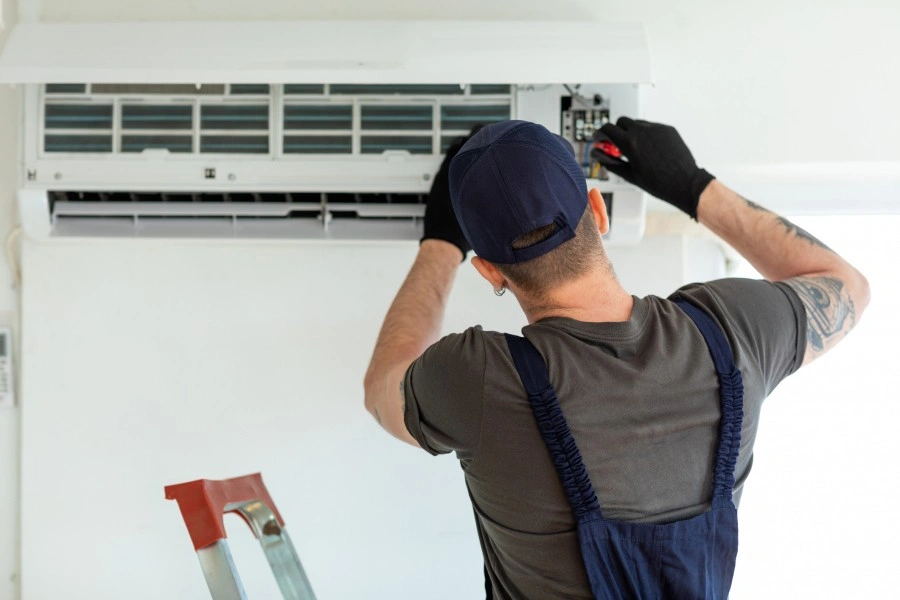
Explore our ductless mini split systems for efficient home temperature control in Lincoln. Perfect for targeted comfort, quick installation, and energy savings. Consult with us today!
Resolve Uneven Home Temperatures Without Major Renovations
Dealing with the scorching summers in Lincoln and Auburn or the freezing, snow-heavy winters in Truckee can be miserable without precise temperature control. If you are relying on window units, space heaters, or an aging central system that leaves hot and cold spots throughout your house, contact us today to schedule a consultation for a high-efficiency solution. BAEHR Heating & Air specializes in installing ductless mini split systems that bypass the energy loss of traditional ductwork, delivering comfort exactly where you need it in communities ranging from Grass Valley to Lake Wildwood and Loomis.
Achieve precise temperature control with zoned heating and cooling capabilities.
Reduce monthly energy costs with high-efficiency units tailored to your home’s specific layout.
Enjoy a quick, non-invasive installation process that respects your home’s architectural integrity.
Backed by comprehensive warranties and flexible financing options, our installations meet all local building codes and safety standards.
The Ductless Mini Split Solution: Scope and Capabilities
A ductless mini split is a heating and cooling system that allows you to control the temperatures in individual rooms or spaces. Unlike traditional forced-air systems that rely on a network of ducts to circulate air, mini splits utilize two main components: an outdoor compressor/condenser and an indoor air-handling unit. These are linked by a conduit housing the power cable, refrigerant tubing, and a condensate drain. This design is particularly effective for the diverse housing stock found in Nevada City and the varying elevations of Placer and Nevada Counties.
When you invest in a ductless system, you are purchasing targeted comfort. These systems act as a primary heating and cooling source for homes without existing ducts, such as historic properties, or as a supplemental solution for room additions, garages, and basements. The technology utilizes inverter-driven compressors, which speed up or slow down based on the system's needs rather than shutting off completely like a traditional HVAC unit. This results in consistent temperatures and significantly lower energy consumption.
System Components and Configuration
Understanding what is included in a typical installation helps in visualizing the end result.
Outdoor Condenser: This unit is installed outside your home, usually on a concrete pad or mounted to the wall. It releases heat in the summer and captures heat in the winter.
Indoor Air Handlers: These are the units you see inside the room. They can be wall-mounted, floor-mounted, or recessed into the ceiling.
Wireless Control: Most modern systems come with a remote control or smart home integration, allowing you to adjust settings from your phone.
Filtration: Each indoor unit contains its own filter, improving indoor air quality by trapping dust and allergens at the source.
Immediate Benefits of Zoning
The primary advantage of this technology is zoning. In a central air system, the thermostat in the hallway dictates the temperature for the entire house. This often leads to wasted energy cooling unoccupied bedrooms or overheating the living room.
Personalized Comfort: Each zone has its own thermostat. You can keep the living room cool while a bedroom stays warmer, satisfying different preferences within the same household.
Energy Conservation: You stop paying to heat or cool rooms that are not in use. Simply turn off the unit in the unoccupied zone.
Adaptability: This system is ideal for homes with difficult layouts, such as split-levels or houses with high ceilings where temperature stratification is an issue.
Step-by-Step Installation Process
One of the main reasons homeowners choose ductless mini splits is the minimally invasive installation process. Unlike installing central air, which requires tearing into walls to run ducts, a mini split installation is clean and typically completed within a day or two, depending on the number of zones.
Site Evaluation and Load Calculation
The process begins with a technical assessment of your property. We evaluate the square footage, insulation levels, window orientation, and local climate factors—whether you are facing the heat of the Central Valley or the alpine chill of the Sierra Nevada. This ensures the unit is strictly sized to handle the heating and cooling load of the specific room.
The technician measures the room dimensions to determine the required BTU capacity.
Potential mounting locations for the indoor and outdoor units are identified to ensure optimal airflow and accessibility for maintenance.
The path for the refrigerant lines is mapped out to minimize visibility on the exterior of the home.
Mounting the Indoor and Outdoor Units
Once the plan is set, the physical installation begins. The goal is to secure the units safely while maintaining the aesthetic appeal of your home.
A mounting plate is secured to the interior wall where the air handler will sit.
A small hole, approximately three inches in diameter, is drilled through the wall to route the conduit.
The outdoor unit is positioned on a rigid base or wall bracket, ensuring it is level and clear of potential snow drifts—a critical consideration for our customers in Truckee.
Connecting and Charging the System
With the units in place, the technical connection phase ensures the system operates efficiently and without leaks.
Refrigerant lines, electrical wiring, and the condensate drain are run through the conduit from the indoor unit to the outdoor condenser.
The lines are connected and sealed.
A vacuum pump is used to remove air and moisture from the refrigerant lines, which is essential for the longevity of the compressor.
The system is charged with the correct amount of refrigerant based on the line length.
Final Testing and Walkthrough
Before the job is considered complete, the system undergoes rigorous testing.
The unit is powered on to check for proper airflow and temperature output.
The condensate drain is tested to ensure water flows freely away from the indoor unit.
The technician demonstrates how to use the remote control, clean the filters, and adjust the louvers for directional airflow.
Replacing vs. Repairing: Making the Right Decision
Homeowners often face the dilemma of whether to repair an existing HVAC component or switch to a ductless solution. While repairs can be cheaper upfront, they are not always the most improved financial decision in the long run. There are specific scenarios where installing a mini split is the superior choice.
When to Switch to Ductless
If your home currently relies on inefficient baseboard heating or loud, insecure window AC units, a switch to ductless is almost always recommended.
High Energy Bills: If your utility costs are skyrocketing due to resistive electric heat or old AC units, the high SEER (Seasonal Energy Efficiency Ratio) of a mini split will provide a return on investment through monthly savings.
Hot and Cold Spots: If your central system cannot push air to the second floor or the master bedroom remains freezing in winter, a mini split solves this specific deficiency without replacing the entire central system.
Renovations and Additions: Extending ductwork to a new sunroom or converted garage is expensive and often technically difficult. A ductless unit operates independently, making it the standard solution for additions.
When to Repair Your Current System
In some cases, sticking with your current setup and performing a repair is the logical path.
Minor Component Failure: If a relatively new central air system needs a simple capacitor or fan motor replacement, repair is cost-effective.
Whole-Home Uniformity: If you prefer a single thermostat controlling the entire house and your ductwork is in pristine condition, maintaining the central system may be preferable to installing multiple heads in every room.
Local Considerations for Northern California
Installing HVAC equipment in our region requires specific attention to environmental factors and local regulations. The requirements for a home in Auburn differ vastly from a cabin in Truckee due to elevation and weather patterns.
Climate-Specific Performance
The performance of a heat pump—the technology behind mini splits—is directly tied to the outdoor temperature.
Heat Pump Efficiency in Freezing Temps: For residents in Truckee and higher elevations, we utilize hyper-heating inverter technology. Standard heat pumps lose efficiency as temperatures drop below freezing. Specialized low-ambient units are designed to deliver 100% heating capacity even when outdoor temperatures drop significantly below zero, ensuring comfort during heavy snowfall.
Cooling Performance in Heat Waves: In Lincoln, Loomis, and Auburn, summer temperatures frequently exceed triple digits. The system must be sized correctly to de-humidify and cool effectively without running constantly at maximum capacity, which wears down the compressor.
Permits and Compliance
All HVAC installations in California are subject to Title 24 energy standards. This includes ductless mini splits.
Permitting: Building permits are generally required for new installations. This ensures the electrical circuits are dedicated and grounded correctly and that the unit placement complies with setback requirements from property lines.
HERS Testing: While ductless systems do not have ducts to test, the installation must still verify refrigerant charge and proper airflow to meet state energy efficiency mandates.
HOA Regulations: In communities like Lake Wildwood, Homeowners Association rules may dictate where the outdoor compressor can be placed to remain out of sight from the street. We assist in planning the installation to adhere to these aesthetic guidelines.
Electrical Requirements
Ductless systems require a dedicated electrical circuit. They cannot simply be plugged into a standard wall outlet.
An electrician or qualified HVAC technician must run a new line from your breaker panel to the outdoor disconnect box.
Older homes in Nevada City or Grass Valley may require a panel upgrade if the current electrical service is maxed out (e.g., 100-amp service).
Why High-Efficiency Zoning Matters Now
The shift toward electrification in California makes high-efficiency heat pumps a smart investment. As utility rates fluctuate and the state incentivizes moving away from fossil fuels, a ductless mini split positions your home for the future.
Inverter Technology Explained
The core differentiator of these systems is the inverter. Traditional ACs are "all or nothing"—they blast cold air until the thermostat is satisfied, then shut off. This cycle creates power surges and temperature swings.
An inverter compressor runs continuously at varying speeds.
It ramps up to reach the set temperature quickly, then throttles down to "cruise control" to maintain it.
This operation is whisper-quiet and eliminates the large power draw associated with system startup.
Improving Indoor Air Quality
Because there is no ductwork, there is no place for dust, mold, and rodent droppings to accumulate and be blown into your living space.
You eliminate the "loss" of air through leaky ducts, which can account for up to 30% of energy consumption in traditional systems.
Maintenance is simpler; homeowners can easily access and wash the filters on the indoor units without special tools.
Securing Your Comfort
Choosing the right system involves more than just picking a brand; it involves accurate sizing, strategic placement, and professional installation that accounts for the unique weather patterns of Northern California. Whether you are retrofitting a Victorian home in Nevada City or conditioning a modern build in Lincoln, the quality of the installation determines the longevity of the unit.
We focus on ensuring that your system is not only installed correctly but also optimized for the specific thermal loads of your rooms. By removing the inefficiencies of ductwork and utilizing advanced heat pump technology, you gain control over your environment and your energy bills.
For a professional assessment of your home’s heating and cooling needs, BAEHR Heating & Air is ready to assist. Contact us today to discuss how a ductless mini split can transform your indoor comfort.
Get Fast HVAC Help
Thank you! Your submission has been received!
Oops! Something went wrong while submitting the form.