

How to Prevent Pine Pollen Clogging Your AC System
Why Pine Pollen and Dust in the Sierra Foothills Clog AC Systems Faster Than Anywhere Else. How pine pollen and dust in the Sierra foothills clog AC systems…
Why Pine Pollen and Dust in the Sierra Foothills Clog AC Systems Faster Than Anywhere Else
How pine pollen and dust in the Sierra foothills clog AC systems faster is one of the most common — and most overlooked — reasons homeowners in Auburn, Grass Valley, and Nevada City end up with an underperforming air conditioner just when summer heat arrives.
Here's the short answer:
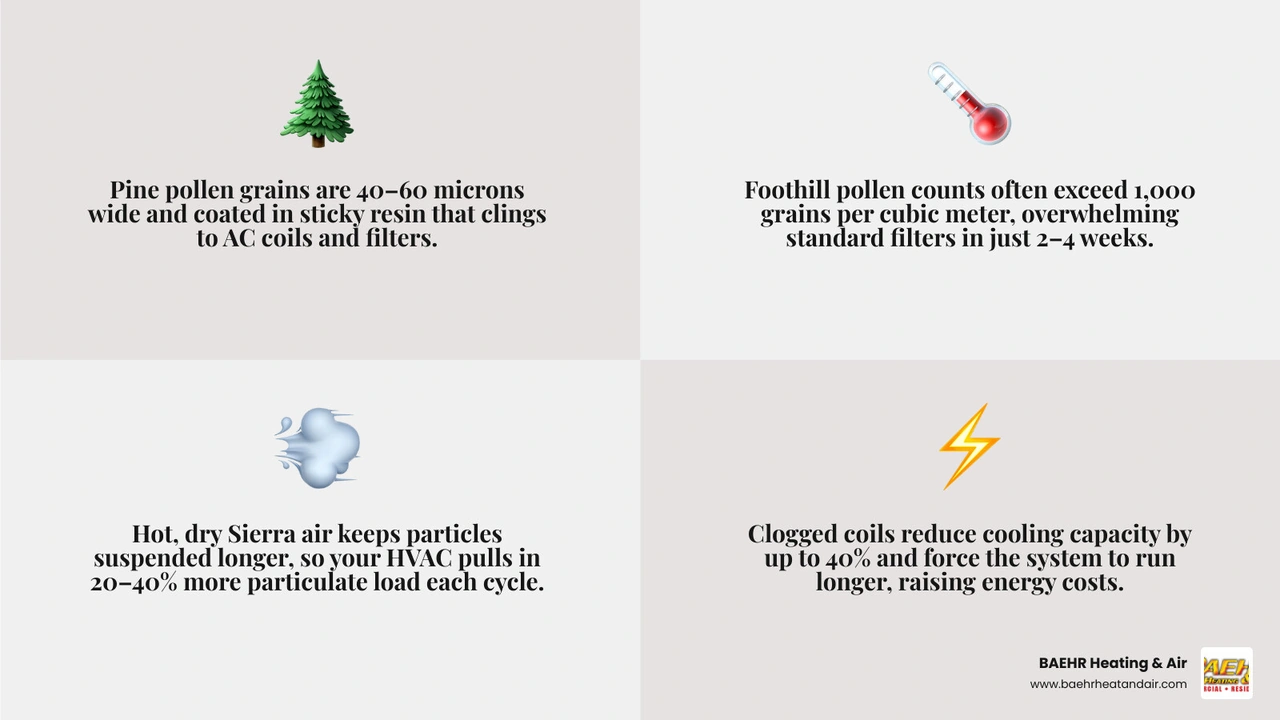
- Pine pollen is larger and stickier than typical household dust, and it coats AC coils and filters rapidly during peak season
- Pollen counts can exceed 1,000 grains per cubic meter in Northern California foothills, overwhelming standard filters in weeks instead of months
- Dry, hot foothill air keeps particles suspended longer, meaning your system pulls in more particulate load with every cycle
- Clogged filters and coils force your AC to work harder, cutting cooling capacity by up to 20–40% and driving up energy use
- Filters may need changing every 2–4 weeks during peak pollen season instead of the standard 90 days
Every spring, Sierra foothill homeowners notice the familiar yellow dust coating their cars, decks, and windowsills. What most don't realize is that the same pollen is getting pulled straight into their HVAC system — and unlike a quick wipe on a surface, pollen inside your AC doesn't clean itself. It builds up on coils, clogs filters, and quietly chips away at your system's efficiency and lifespan.
How Pine Pollen and Dust in the Sierra Foothills Clog AC Systems Faster
To understand why our cooling systems struggle so much in places like Truckee, Penn Valley, and Loomis, we have to look at the unique biology of pine pollen and the dry climate of the Sierra Nevada region.
Unlike the microscopic, powdery dust you find on a bookshelf, pine pollen grains are relatively large—typically ranging from 50 to 100 microns in size. However, their physical size is only half the problem. The real threat lies in their shape and chemical makeup. Pine pollen grains possess air-filled sacs (which help them float long distances through the foothill winds) and are coated in a sticky, resinous outer layer designed to adhere to surfaces.
When these sticky grains enter your home's air supply, they don't simply pass through or sit loosely on surfaces. They stick. When mixed with the fine, mineral-rich soil dust kicked up by summer winds and local agricultural activities, they form a tacky, concrete-like paste.
Furthermore, the dry summer air of the Sierra foothills acts as an accelerator. Dry air generates static electricity, which causes these lightweight, sticky pollen particles to bond electrostatically to the metal surfaces of your air conditioner, including the fan blades, blower wheels, and sensitive electrical components.
As peak pollen season hits Northern California, pollen counts frequently soar past 1,000 grains per cubic meter. This massive particulate load is continuously sucked into your return vents, creating a rapid-clogging effect that standard systems simply aren't built to handle without targeted care. If you are noticing persistent dust or suspect your indoor air is heavily saturated, scheduling Air Quality Testing Grass Valley CA or Air Quality Testing Auburn CA is an excellent first step to understanding exactly what is circulating through your home.
Vulnerable HVAC Components and the Threat of Foothill Heat
When your AC system is forced to breathe in this sticky yellow cocktail, several critical components bear the brunt of the damage.

The Evaporator Coil (Indoor Unit)
Your indoor evaporator coil is cold and wet because it extracts moisture from your home's air as it cools. When sticky pine pollen and fine dust blow past this damp coil, they cling to the metal fins instantly. This creates an insulating barrier of grime. Because the heat transfer is blocked, the refrigerant inside the coil cannot absorb heat effectively. This can reduce your cooling capacity by 20% to 40%, occasionally causing the coil to freeze over entirely—even when it is 95°F outside in Rocklin or Lincoln.
The Condenser Coil (Outdoor Unit)
Your outdoor unit relies on pulling outdoor air through its metal fins to release the heat extracted from your home. During the spring and summer, the outdoor fan sucks in thousands of cubic feet of air—along with clouds of pine pollen. As the pollen coats the condenser fins, it blocks heat dispersal. This forces your compressor to work twice as hard to cool your home, leading to a major power bill spike and accelerated wear.
Blower Motors and Fan Blades
As fine dust and sticky pollen bypass cheap filters, they settle on the blower wheel blades. Because the weight of this sticky grime is rarely distributed evenly, it causes the fan to become unbalanced. This puts immense physical strain on the blower motor bearings, leading to squeaking, rattling, and eventual motor burnout.
The combination of restricted airflow and insulated coils increases the system's internal static pressure, forcing the AC to run for longer cycles. This extra strain can shorten your equipment's expected lifespan by up to 50%. To avoid these issues, it helps to familiarize yourself with Common HVAC Repair Issues so you can catch them before they lead to system failure, helping you preserve Understanding the Lifespan of Your AC.
Particulate Comparison Table
| Characteristic | Pine Pollen | Typical Household Dust |
|---|---|---|
| Average Particle Size | 50 – 100 microns (Large) | 1 – 10 microns (Microscopic) |
| Texture & Adhesion | Sticky, resinous, and highly adhesive | Dry, loose, and easily swept or vacuumed |
| Source | Conifer trees (Ponderosa/Jeffrey Pines) | Sloughed skin cells, pet dander, fabric fibers |
| HVAC Impact | Glues itself to wet coils; blinds filter faces | Gradually accumulates in ductwork and on surfaces |
| Peak Season | Spring to early summer (April – June) | Year-round |
Step-by-Step Guide to Protecting Your AC System from Pollen and Dust
Protecting your home from the yellow dust cloud of the Sierra foothills requires a proactive strategy that addresses both your home’s structural envelope and your HVAC maintenance habits.
Step 1: Air Seal Your Home’s Building Envelope
Many homeowners assume pollen only enters through open doors and windows. In reality, the vast majority of airborne particulates are drawn in through tiny gaps and cracks in your home's structure. Due to the "stack effect," warm air escaping through your attic pulls outdoor air—and pollen—in through gaps around plumbing pipes, electrical wiring, and crawlspaces. Sealing these gaps blocks the entry points before the pollen ever reaches your living spaces.
Step 2: Manage Your Ventilation Wisely
While fresh air is generally great for a home, inviting outdoor air inside during peak pine pollen season is an open invitation for system clogging.
- Keep windows and doors firmly shut during high-pollen days.
- If your home has a mechanical ventilation system (like an ERV or HRV), consider limiting its runtime during peak morning pollen releases.
- Rely on your AC system to recirculate and filter the indoor air rather than bringing in raw, pollen-heavy outdoor air.
For a complete breakdown of proactive steps you can take around your property, check out our Homeowners Guide Preventative AC Maintenance and understand the Importance of Regular AC Maintenance to keep your system breathing easy all summer long.
Why standard filters fail and how pine pollen and dust in the sierra foothills clog ac systems faster
Standard, flat fiberglass filters (the cheap, see-through ones) are completely inadequate for homes in wooded environments like Lake Wildwood and Grass Valley. These filters are designed to do one thing: stop large debris like dog hair from damaging the blower motor. They do almost nothing to stop pollen grains or fine mineral dust.
Because pine pollen has a high concentration of natural resins, it quickly coats the surface fibers of these basic filters. Once the sticky surface is blinded, the filter acts as a solid wall, choking your system's airflow. This causes a massive drop in system efficiency and places immense stress on your blower motor.
To combat this, we recommend upgrading to pleated filters or high-capacity media filters. Pleated filters dramatically increase the surface area available to catch particulates, allowing the filter to hold a much higher volume of sticky pollen before restricting airflow.
- MERV 8 to MERV 11 filters are the ideal "sweet spot" for foothill homes. They are dense enough to capture pollen and fine dust under 10 microns without placing excessive static pressure on your blower motor.
- Avoid standard HEPA filters in standard HVAC slots, as their extreme density can restrict airflow so severely that it causes motor burnout or frozen coils.
To explore the best filtration setup for your specific home layout, check out our Comprehensive Filtration Services and learn about Enhancing Air Quality with Advanced Filtration.
How to diagnose if pine pollen and dust in the sierra foothills clog ac systems faster than normal
It can be difficult to tell if your air conditioner is struggling due to a simple pollen clog or a more complex mechanical issue like a refrigerant leak. Here is how to diagnose pollen-related performance drops:
- The Light Test: Slide your air filter out and hold it up to a bright light. If no light passes through the filter because it is caked in a yellow-gray, fuzzy layer, your system is suffering from restricted airflow.
- Listen for Whistling: A system trying to pull air through a pollen-blinded filter will often make high-pitched whistling or whistling-hum noises near the return vents.
- Ice on the Lines: If you notice ice forming on the brass refrigerant lines leading to your outdoor unit, or on the indoor coil itself, check your filter first. Airflow restriction from pollen is the number-one cause of frozen coils, often mistaken for a refrigerant leak.
- Weak Airflow: If the air blowing from your registers feels cool but weak, a clogged filter or a dirty blower wheel is likely the culprit.
Catching these signs early is key. A timely AC Tune Up Can Prevent Breakdowns and save you from costly emergency repairs during a July heatwave.
Advanced Indoor Air Quality Solutions for Foothill Homes
For families dealing with severe seasonal allergies, or for homeowners who want to minimize hands-on maintenance, standard air filters might not be enough.
Installing a whole-home air purifier or air scrubber directly into your ductwork provides a powerful defense against outdoor particulates. These systems work in tandem with your air conditioner to actively clean the air every time the fan runs.
- Polarized Media Air Cleaners: These systems place a safe, low-voltage static charge on the filter media. This charge acts like a magnet for sticky pine pollen and fine dust, pulling them out of the air stream far more effectively than standard passive filters.
- UV Air Purifiers and Scrubbers: These devices use specialized light and catalytic reactions to break down organic compounds. This helps neutralize sticky resins and biological contaminants before they can settle on your AC coils.
- Whole-Home HEPA Bypass Systems: For the ultimate in air purification, a bypass system diverts a portion of your home's return air through a true medical-grade HEPA filter. This setup delivers maximum filtration without restricting the primary airflow to your AC blower.
To find the perfect system for your home, take a look at our Indoor Air Quality Solutions Guide. We also provide specialized regional solutions, such as our Whole House Air Purifier Grass Valley CA and Whole House Air Purifier Auburn CA services, tailored to the unique environmental demands of the local foothills.
Frequently Asked Questions About Foothill Pollen and HVAC Care
How often should I change my AC filter during peak pine pollen season in Grass Valley?
During the peak pollen months (typically April through June), you should inspect your air filter every two weeks. In high-pollen areas like Grass Valley, Nevada City, and Auburn, filters often need to be replaced every 2 to 4 weeks instead of the standard 90 days. If the filter material looks yellow, gray, or fuzzy, replace it immediately to prevent system strain.
Can I hose down my outdoor AC unit to remove sticky yellow pollen?
Yes, but you must be gentle. Turn off your thermostat first. Using a standard garden hose with a gentle spray nozzle, rinse the outdoor condenser coils from top to bottom. Never use a pressure washer, as the high pressure will instantly bend and crush the delicate aluminum condenser fins, permanently restricting airflow and requiring professional repair.
Should I keep my windows closed and turn off ventilation systems when pollen counts are high?
Yes. Keeping your windows closed prevents heavy pine pollen from settling on your indoor surfaces and getting pulled into your AC system. If you have mechanical ventilation systems that bring in raw outdoor air, limit their use during peak morning hours when pollen release is highest. Relying on indoor recirculation through a high-quality filter is much safer for your system and your respiratory health. You can learn more about managing your home's air by reading about Indoor Air Quality Importance.
Conclusion
Living in the beautiful Sierra foothills means accepting a yearly blanket of yellow pine pollen and summer dust. However, protecting your home's air conditioner from this sticky debris doesn't have to be a constant struggle. By upgrading your filters, sealing air leaks, and keeping a close eye on your system during peak season, you can enjoy cool, clean indoor air all summer long.
At BAEHR Heating & Air, we specialize in helping homeowners throughout Lake Wildwood, Rocklin, Penn Valley, Nevada City, Grass Valley, Loomis, Auburn, Lincoln, and Truckee protect their cooling systems from regional environmental challenges. Our annual maintenance membership provides comprehensive preventative care with two seasonal visits per system to ensure your coils are clean, your airflow is strong, and your home is comfortable year-round.
Ready to protect your system from the summer grime? Contact us today to schedule your professional AC Maintenance Services!
Ready to breathe easy?
Schedule service or request a free estimate. Honest assessments and upfront pricing on every visit across Nevada County.