

How Often to Service a Heat Pump in Hot Summer & Cold Winter Foothills
Why Heat Pump Service Frequency Matters in the Foothills. If you've been wondering how often should a heat pump be serviced in a hot summer and cold winter…
Why Heat Pump Service Frequency Matters in the Foothills
If you've been wondering how often should a heat pump be serviced in a hot summer and cold winter foothill climate, here's the direct answer:
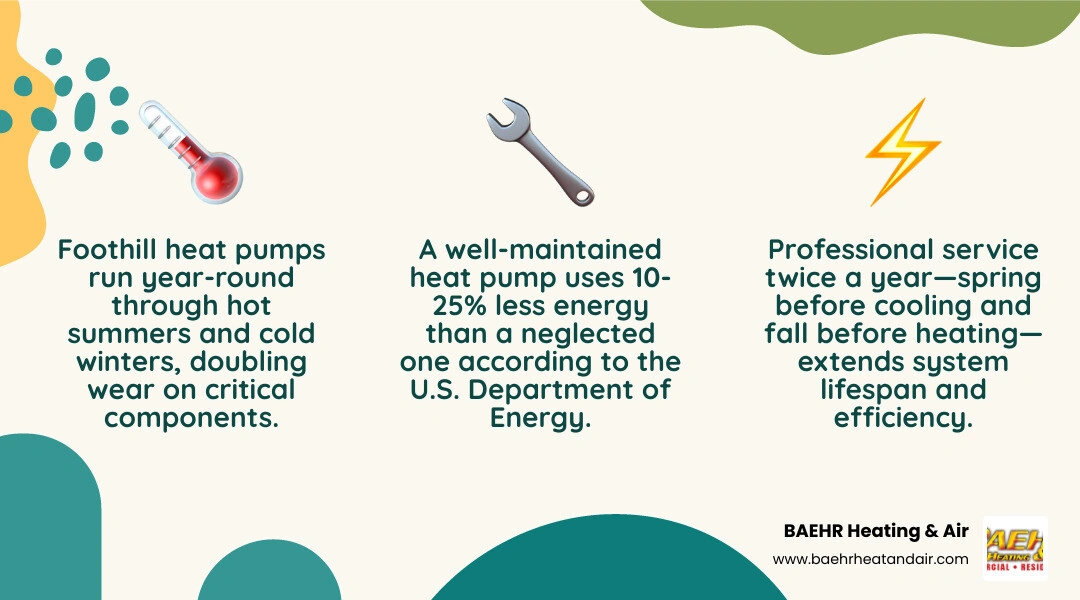
Heat pumps in Sierra Foothill climates should be professionally serviced twice per year:
- Spring (March–May): Before cooling season begins — covers refrigerant charge, coil cleaning, and airflow checks
- Fall (September–November): Before heating season begins — covers defrost cycle testing, reversing valve inspection, and electrical checks
Quick Answer: Twice yearly is the recommended standard for foothill climates with extreme seasonal temperature swings. Once-yearly service is the bare minimum for warranty compliance but leaves one full season without a professional check.
Foothill homeowners in areas like Grass Valley and Nevada City deal with something most heat pump guides don't account for: a system that works hard in both directions. Summers push heat pumps to run long cooling cycles in dry, dusty, pollen-heavy air. Winters bring genuine cold snaps, frost on outdoor coils, and overnight temperatures that test the defrost cycle repeatedly.
That combination means your heat pump never really gets a break. Unlike a furnace or a standalone air conditioner — each of which sits idle half the year — a heat pump runs year-round. That continuous operation doubles the wear on components like the compressor, blower motor, and reversing valve. According to the U.S. Department of Energy, a well-maintained heat pump can be 10% to 25% more energy efficient than a neglected one. In a climate like the Sierra Foothills, where the system is working in June heat and January frost alike, that difference adds up fast.
The good news is that a clear, twice-yearly service schedule keeps your system running reliably and can extend its lifespan well beyond the national average.
How Often Should a Heat Pump Be Serviced in a Hot Summer and Cold Winter Foothill Climate?
To understand why twice-yearly professional care is the gold standard, we have to look at how these systems handle our unique geography. If you live in a place like Loomis or Rocklin, your summers are sizzling, often pushing past 100°F. Yet, just up the highway in Truckee or Nevada City, winter temperatures regularly plunge below freezing.
When you ask how often should a heat pump be serviced in a hot summer and cold winter foothill climate, a single annual visit simply isn't enough to prepare a system for both of these extremes. Scheduling a dedicated Heat Pump Service in both the spring and the fall ensures your system is calibrated precisely for the workload immediately ahead of it.
Why the Sierra Foothills Demand Twice-Yearly Attention
A heat pump is a mechanical marvel. Instead of generating heat through combustion (like a gas furnace) or electrical resistance, it simply moves heat from one place to another using refrigerant. In the summer, it extracts heat from inside your home and pumps it outdoors. In the winter, it reverses this process, extracting thermal energy from the cold outdoor air and bringing it inside.
This bidirectional operation provides incredible efficiency, but it also means your system accumulates wear and tear twice as fast as a traditional single-season setup. While your neighbors with standalone furnaces get to give their heating systems a rest from May through September, your heat pump is continuously working to provide Year-Round Comfort with Heat Pumps.
In our foothill microclimates, the shift between seasons is dramatic. A system running in "cool" mode during a dry, dusty August afternoon faces entirely different physical demands than the same system operating in "heat" mode during a freezing, foggy January night. Biannual maintenance ensures that the reversing valve, defrost control board, and dual-mode refrigerant pressures are tested and verified before those seasonal shifts catch you off guard.
How Often Should a Heat Pump Be Serviced in a Hot Summer and Cold Winter Foothill Climate for System Longevity?
Investing in twice-yearly maintenance directly impacts how long your system will protect your home. Nationally, heat pumps have an average lifespan of 12 to 15 years. However, in our milder Northern California foothill regions, a properly maintained system can easily last 15 to 20 years. If you have a ductless mini-split system, regular professional care can stretch that lifespan to an impressive 18 to 25 years.
You can read more about these lifecycle dynamics in our Home Heat Pump Ultimate Guide. The secret to this longevity is simple: preventing minor component wear from cascading into catastrophic system failures.
For example, a slightly dirty outdoor coil causes the compressor to work harder and run hotter to reject heat during a summer heatwave. Over time, this extra thermal stress degrades the compressor's internal lubricants, leading to premature compressor failure—one of the most expensive repairs a homeowner can face. By cleaning those coils twice a year and verifying the correct refrigerant charge, we keep the heart of your system running cool and stress-free, preserving your manufacturer's warranty and protecting your long-term investment.
Key Maintenance Tasks for Foothill Heat Pumps
When our technicians arrive at your home in Lake Wildwood, Penn Valley, or Lincoln, they don’t just swap out a filter and call it a day. A professional foothill tune-up is a highly technical, multi-point process designed to address the specific environmental challenges of our region. If you ever need to Troubleshoot and Fix Heat Pump Issues, you'll quickly find that many common problems stem from neglecting these core maintenance tasks.
How Often Should a Heat Pump Be Serviced in a Hot Summer and Cold Winter Foothill Climate to Prevent Airflow Blockages?
Airflow is the lifeblood of any heat pump system. Because these units rely on transferring heat across aluminum fins on the indoor and outdoor coils, any restriction in airflow immediately tanks system efficiency and strains mechanical components.
In the Sierra Foothills, our air is beautiful, but it is also filled with organic debris. Spring brings a heavy blanket of oak pollen and pine dander, which acts like a sticky blanket on your outdoor condenser coils. Summer and autumn bring agricultural dust and, unfortunately, wildfire smoke. These fine particulates lodge deep within the delicate fins of your outdoor unit, creating an insulating barrier that prevents efficient heat transfer.
Left unchecked, these blockages lead to some of the most Common Heat Pump Problems, including system short-cycling, poor indoor air quality, and high utility bills. Professionally cleaning these coils twice a year ensures your system can breathe freely through every season.
Preparing for Winter Frost and Summer Heat Waves
Because our winters bring freezing overnight temperatures, your outdoor unit will naturally accumulate frost on its coils when operating in heating mode. To keep this frost from turning into a solid block of ice, the heat pump utilizes a defrost control board and a reversing valve.
During a defrost cycle, the system temporarily switches back into cooling mode. It stops the outdoor fan and directs hot refrigerant back to the outdoor coil to melt the ice, while utilizing auxiliary heat strips indoors to keep your home from feeling a sudden chill.
Testing this defrost cycle and the auxiliary heating elements is a critical part of our fall service checklist. If your defrost system fails in the middle of a cold snap in Truckee or Grass Valley, your outdoor unit will freeze over, completely halting your heat source.
To give you a clear picture of what goes into these seasonal visits, here is how we break down our spring and fall maintenance focus areas:
| Maintenance Task | Spring Visit (Cooling Focus) | Fall Visit (Heating Focus) |
|---|---|---|
| Outdoor Coil Cleaning | Deep wash to remove oak pollen & winter grime | Clear fallen leaves, pine needles & autumn debris |
| Refrigerant Charge Verification | Checked in Cooling Mode | Checked in Heating Mode |
| Electrical Connections | Inspect contactors & tighten terminals | Inspect & test auxiliary heat strip relays |
| Defrost System Testing | N/A | Force-test defrost cycle & sensors |
| Reversing Valve Inspection | Verify smooth transition to cool | Verify smooth transition to heat |
| Condensate Drain Line | Flush and treat to prevent summer algae | Inspect drain pan & verify clear drainage |
| Airflow & Blower Motor | Measure static pressure & clean blower | Check blower belt & lubricate motor bearings |
Risks of Skipping Your Biannual Heat Pump Service
It can be tempting to adopt an "if it isn't broken, don't fix it" mentality when it comes to your HVAC system. However, with a year-round system like a heat pump, skipping professional maintenance is an expensive gamble.
When a system is neglected, several technical risks begin to develop beneath the surface:
- Undetected Refrigerant Leaks: Heat pumps operate under incredibly high pressures. A tiny vibration can cause a copper line to rub against a bracket, creating a microscopic pinhole leak. If left untreated, low refrigerant levels will cause the system to lose efficiency, freeze up, and eventually destroy the compressor.
- Compressor Strain and Failure: As filters clog and coils get dirty, the compressor must work twice as hard to move the same amount of heat. This constant strain dramatically shortens its operating life.
- Skyrocketing Energy Bills: A neglected heat pump can easily consume 10% to 25% more electricity than a well-maintained system. In the peak of a hot Lincoln summer or a freezing Truckee winter, that efficiency loss translates directly to higher utility costs.
- Voided Manufacturer Warranties: Almost all major HVAC manufacturers require documented annual or biannual professional maintenance to keep their parts warranties valid. If a major component fails and you cannot provide proof of regular servicing, you may have to pay for the replacement out of pocket.
If you suspect your system is already struggling due to skipped maintenance, it might be Time for Heat Pump Repair to get things back on track before a total breakdown occurs.
DIY Maintenance Tips Between Professional Visits
While twice-yearly professional service is essential, there are several simple tasks you can perform between our visits to keep your system running beautifully. Taking an active role in your system’s care is the best way to ensure you are Maximizing Efficiency Mini Split Heat Pump systems or central ducted units alike.
- Check and Replace Your Air Filters Monthly: This is the single most important DIY task. In our dusty foothill environment, standard 1-inch pleated filters should be replaced every 1 to 3 months. During active wildfire seasons or high pollen periods, check them every 30 days.
- Maintain Outdoor Clearance: Keep a 2-foot clear zone all the way around your outdoor condenser unit. Regularly trim back foothill brush, clear away fallen oak leaves, and sweep away pine needles.
- Keep Vents and Registers Open: Ensure that indoor supply and return registers are not blocked by furniture, drapes, or rugs. Restricting indoor airflow can cause the indoor coil to freeze up in summer or overheat in winter.
- Avoid Constant Thermostat Adjustments: Heat pumps operate most efficiently when they can maintain a steady, consistent temperature. Avoid turning your system off when you leave for the day; instead, set it to a comfortable, steady temperature and let it do its job.
- Set Your Thermostat Mode Correctly: Avoid using the "AUTO" mode on your thermostat, which can cause the system to constantly toggle back and forth between heating and cooling during our cool foothill mornings and warm afternoons. Stick to "HEAT" in the winter and "COOL" in the summer.
Frequently Asked Questions About Foothill Heat Pump Care
What are the signs my heat pump needs immediate repair?
While regular maintenance prevents most issues, you should contact us immediately if you notice any of these warning signs:
- Unusual Noises: Squealing, grinding, or loud metal-on-metal rattling sounds often indicate a failing blower motor or compressor issue.
- Weak Airflow: If the air coming from your registers feels weak or isn't reaching your set temperature, there may be a severe duct leak, a failing blower, or a clogged coil.
- Short-Cycling: If your system turns on and off rapidly every few minutes, it is likely overheating or experiencing an electrical fault.
- Ice Accumulation in Winter: While a light frost is normal, a thick block of ice covering your outdoor unit means your defrost cycle has failed and your Heat Pump Needs Expert Repair before the system suffers permanent damage.
Do ductless mini-splits require the same service frequency?
Yes. In fact, ductless mini-split systems often require even more diligent filter maintenance than central systems. Because mini-splits don't use large, centralized ductwork, they rely on smaller, highly efficient filters located inside each indoor wall unit.
We recommend that homeowners pop open the front covers of their indoor heads and wash the reusable plastic mesh filters every 4 to 6 weeks. Professionally, these systems should still be serviced twice a year to deep-clean the indoor blower wheels (which are prone to mold and dust buildup) and wash the outdoor coils. You can explore the many Benefits of Mini Split Heat Pumps to see why they are such a popular choice for foothill homes.
Can I use a standard thermostat with my foothill heat pump?
We highly recommend using a thermostat specifically designed for heat pump operation. Standard thermostats designed for traditional gas furnaces do not understand how to properly manage a heat pump’s auxiliary heating stages.
If a standard thermostat is miscalibrated, it may prematurely trigger your highly inefficient "emergency heat" or auxiliary electric heat strips when the outdoor temperature drops, causing your electric bills to spike unnecessarily. Upgrading to a smart, heat-pump-compatible thermostat ensures your system always prioritizes its highly efficient compressor before calling for backup heat. To learn more about how these systems differ from traditional setups, check out our guide on Heat Pump vs Gas Furnace Infrastructure.
Conclusion
Living in the beautiful Sierra Foothills means enjoying hot, golden summers and crisp, snowy winters. To keep your home comfortable through every dramatic temperature swing, your heat pump needs dedicated, twice-yearly professional attention.
At BAEHR Heating & Air, we are proud to serve our neighbors throughout Grass Valley, Nevada City, Lake Wildwood, Rocklin, Penn Valley, Loomis, Auburn, Lincoln, and Truckee. We make keeping up with your seasonal maintenance easy with our annual maintenance membership, which covers two comprehensive precision tune-ups per year to keep your system running at peak efficiency.
Don't wait for the first winter freeze or the next summer heatwave to find out if your system is up to the task. Schedule your service today and let our customer-first team bring you peace of mind and year-round comfort.
Ready to breathe easy?
Schedule service or request a free estimate. Honest assessments and upfront pricing on every visit across Nevada County.