

How to Fix a Tripping AC Breaker in Nevada County
If you're dealing with a circuit breaker tripping when ac turns on what to do in a nevada county home is probably the first thing on your mind — and the…
What to Do When Your AC Trips the Circuit Breaker in Nevada County
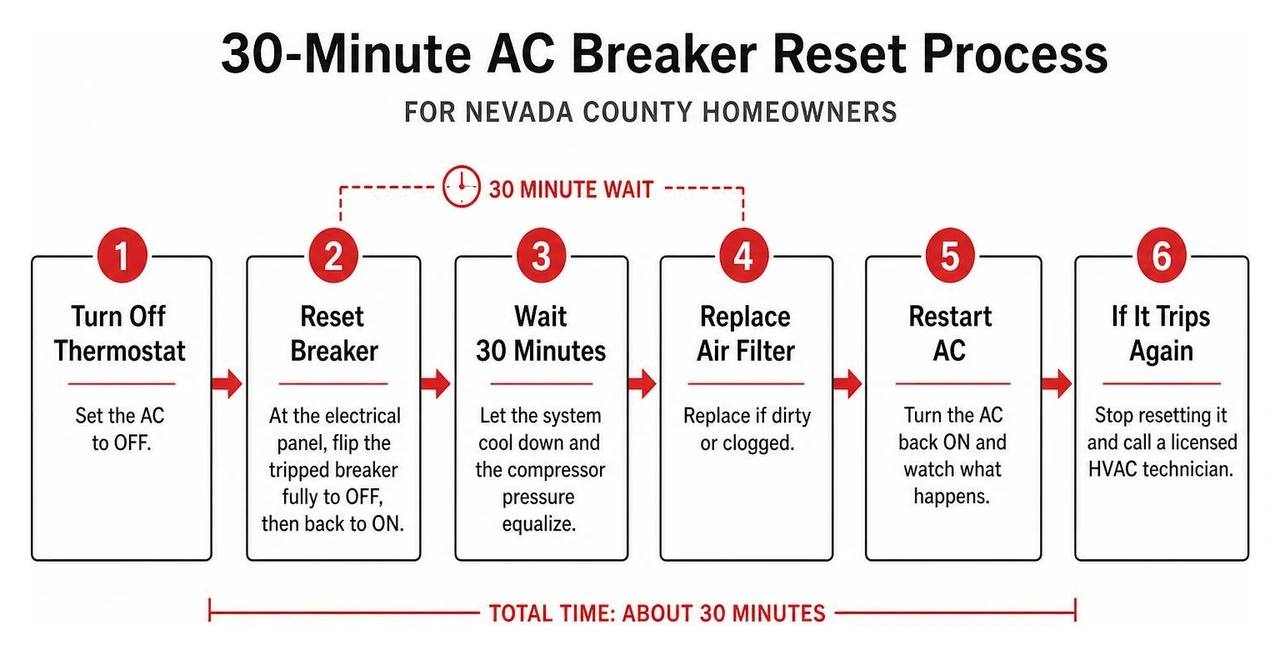
If you're dealing with a circuit breaker tripping when ac turns on what to do in a nevada county home is probably the first thing on your mind — and the short answer is: don't keep resetting it. Here's what to do first:
- Turn off your thermostat and set the AC to off.
- Go to your electrical panel and flip the tripped breaker fully to OFF, then back to ON.
- Wait 30 minutes before turning the AC back on — this lets the system cool down and the compressor pressure equalize.
- Replace your air filter if it looks dirty or clogged.
- Restart the AC and watch what happens.
- If the breaker trips immediately again, stop resetting it and call a licensed HVAC technician — the problem is likely a failing electrical component that needs professional diagnosis.
Your circuit breaker is not the enemy here. It's doing exactly what it was designed to do — cutting power before an overloaded or faulted circuit causes real damage, or worse, an electrical fire. According to FEMA, roughly 24,000 residential electrical fires are reported in the United States every year, and many are linked to overloaded circuits and neglected AC maintenance.
Nevada County summers can push home cooling systems hard. Whether you're in Grass Valley, Nevada City, or Auburn, the combination of summer heat, older home wiring, and a system that hasn't been serviced recently creates the perfect conditions for a breaker trip. Understanding what's causing the trip — and knowing when to stop troubleshooting yourself — can save your equipment and protect your home.
Essential circuit breaker tripping when ac turns on what to do in a nevada county home terms:
- ac troubleshooting before calling a pro
- how to check if ac refrigerant is low before calling a technician in nevada county
- why is my ac blowing warm air during a grass valley summer heat wave
Understanding a Circuit Breaker Tripping When AC Turns On: What to Do in a Nevada County Home
To understand why your air conditioner is suddenly picking fights with your electrical panel, it helps to look at your circuit breaker as a safety guard. Think of it as a bouncer standing at the door of your home's electrical system. When too many amps try to rush through the wire at once, the bouncer shuts the door to prevent the wires from overheating, melting, or starting a fire.
When your air conditioner turns on, it naturally draws a large surge of electricity to get the heavy mechanical parts moving. However, if that draw exceeds what the circuit is rated to handle, the breaker trips. Generally, these trips fall into three major electrical categories:
- Overloaded Circuits: This is the most common and least dangerous scenario, though it is still a major nuisance. It occurs when the total electrical demand on a single circuit exceeds its safe operating limit. For safety, a standard breaker should only be loaded to 80% of its maximum capacity for sustained periods (for example, 12 amps on a 15-amp circuit, or 16 amps on a 20-amp circuit). If your AC is sharing a circuit with other high-draw appliances like a space heater, microwave, or hair dryer, the combined load will easily cross that threshold and trigger a trip.
- Short Circuits: A short circuit is a more serious electrical fault. It happens when a "hot" wire carrying electricity comes into direct contact with a "neutral" wire. This bypasses the normal resistance of your electrical components, creating an uninterrupted path where current can flow at dangerously high speeds. The sudden, massive spike in current causes the breaker to trip instantly to prevent the wires from melting.
- Ground Faults: Similar to a short circuit, a ground fault occurs when a hot wire slips out of place and makes contact with a grounded portion of the system, such as the metal casing of your outdoor condenser unit or a ground wire. If you touch a metal cabinet that is experiencing a ground fault, you risk receiving a severe electrical shock. Fortunately, modern breakers and GFCI outlets are designed to detect this immediately and shut down power in a fraction of a second.
If your system is tripping due to internal mechanical strain or wiring degradation, resolving it requires targeted AC Repair to locate the exact point of electrical failure.
Common Mechanical Causes Behind a Circuit Breaker Tripping When AC Turns On: What to Do in a Nevada County Home
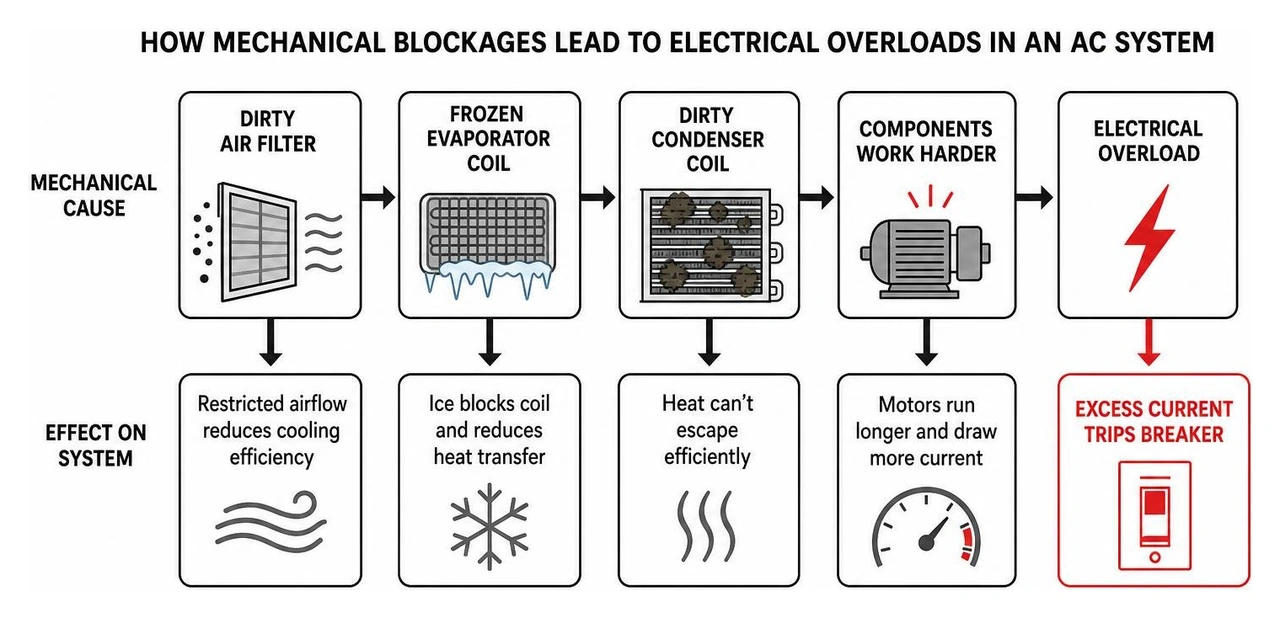
Many homeowners are surprised to learn that mechanical neglect is the root cause of electrical trips. When your AC's mechanical components are dirty, restricted, or worn down, they have to work much harder to perform their basic duties. This extra physical strain forces the motors to draw more electrical current, eventually overloading the breaker.
Here are the most common mechanical culprits we find in local homes:
- Dirty Air Filters: A heavily clogged air filter acts like a brick wall to your HVAC system's airflow. When the indoor blower fan cannot pull enough air through the filter, it has to run longer and work significantly harder to circulate air. This restricted airflow causes the blower motor to overheat, draw excess current, and trip the breaker.
- Frozen Evaporator Coils: When airflow is restricted by a dirty filter or when refrigerant levels run low, the indoor evaporator coil can drop below freezing. Condensation on the coil quickly turns to ice, completely blocking the heat exchange process. As the system struggles to cool your home, the compressor and fan motors run continuously without a break, leading to an eventual system overload and a tripped breaker. If you notice ice buildup on your indoor unit, you are likely dealing with an AC Not Cooling scenario that requires immediate attention.
- Dirty Condenser Coils: Your outdoor AC unit is responsible for releasing the heat collected from inside your home. Over time, the outdoor condenser coils get covered in a thick layer of dirt, dust, pollen, and falling leaves. This buildup acts as an insulating blanket, trapping heat inside. Because the system cannot shed heat efficiently, the compressor must pump harder, raising the internal pressure and forcing the unit to draw dangerous amounts of electricity.
Electrical Failures Causing a Circuit Breaker Tripping When AC Turns On: What to Do in a Nevada County Home
If the mechanical components of your system are clean and clear, the issue is likely a direct electrical failure within the outdoor condenser unit or the indoor air handler. These issues are more technical and carry high-voltage risks, making them unsafe for DIY repairs.
- Failing Capacitor: The capacitor is a small, cylindrical component that acts like a temporary battery. It stores up electrical energy and delivers a powerful jolt to help your compressor and fan motors start up. Over time, heat and electrical wear cause capacitors to degrade and lose their charge. When a capacitor fails, the compressor struggles to start, drawing a massive amount of "Locked Rotor Amps" (LRA) as it tries to force itself alive. This sudden surge immediately trips the breaker.
- Grounded Compressor: This is the most catastrophic failure an air conditioner can experience. A grounded compressor occurs when the electrical windings inside the motor break down, causing the live electrical wire to touch the metal frame of the compressor. This creates a direct path to the ground, resulting in an immediate, high-current short circuit that trips the breaker the exact millisecond the AC attempts to turn on. A grounded compressor typically requires a full compressor replacement or a complete system upgrade.
- Fan Motor Malfunction: The outdoor condenser fan motor disperses heat from the outdoor unit. If the bearings inside this motor seize up or the internal wiring shorts out, the motor will stall. As it tries to spin against the physical resistance of seized bearings, the motor draws excessive current, causing the breaker to trip. If you are trying to figure out Why Is Your AC Not Turning On How to Fix these electrical issues, checking the health of your capacitors and motors is the primary step for a professional.
Safe Step-by-Step Troubleshooting for Nevada County Homeowners
Before you pick up the phone to call us, there are a few safe, basic troubleshooting steps you can perform to rule out simple issues. Remember: never work on the internal electrical wiring of your AC or open your electrical panel's main cover yourself. High-voltage electrical components carry severe shock risks.
Follow this step-by-step diagnostic process to isolate the issue:
- Check Your Thermostat: Turn your thermostat completely OFF. This ensures the AC won't try to start up automatically and draw power while you are resetting the breaker.
- Inspect the Electrical Panel: Locate your home's main breaker box. Look for the breaker labeled "AC" or "Air Conditioner." A tripped breaker won't be in the ON or OFF position; it will be resting in the middle.
- Perform a Clean Reset: To reset the breaker, push it firmly to the Full OFF position until you hear a distinct click, then switch it back to the ON position.
- Inspect the Air Filter: Check your home's return air filter. If it is covered in a grey blanket of dust, pet hair, or dander, replace it immediately with a fresh, clean filter.
- Clear Outdoor Debris: Walk outside to your condenser unit. Ensure there are no grass clippings, weeds, leaves, or pine needles blocking the metal grates. Maintain at least two feet of clear space around the entire unit.
- Test the System: Turn your thermostat back to "Cool" and lower the temperature setting. Listen closely to what happens next.
To help you decide when a problem is a quick fix versus a professional job, refer to our comparison table below:
| Symptom / Observation | Likely Cause | Homeowner Action (DIY) | Professional Action Required |
|---|---|---|---|
| Breaker trips only after running for 20-30 minutes | Overheating due to restricted airflow or dirty coils | Replace dirty air filter; clear outdoor debris | Clean condenser coils; check refrigerant levels |
| Breaker trips the exact millisecond the AC turns on | Direct electrical short circuit or grounded compressor | Stop resetting the breaker. Turn off system | Diagnose short circuit, test capacitor, or replace compressor |
| AC fan runs, but outdoor unit hums loudly and trips | Failing start capacitor or seized fan motor | None (Electrical hazard) | Replace capacitor or fan motor |
| Breaker trips immediately with nothing else running on the circuit | Faulty breaker or loose panel wiring | None (High voltage hazard) | Inspect panel connections and replace the circuit breaker |
If you have walked through these basic steps and the system continues to struggle, our AC Troubleshooting Guide Before Calling Pro provides additional tips to help you narrow down the issue before our technician arrives.
Local Environmental and Electrical Factors in Nevada County
Living in Nevada County offers beautiful scenery, but our local environment and infrastructure present unique challenges for residential cooling and electrical systems. Whether you live in a historic home in Nevada City, a property surrounded by towering pines in Grass Valley, or a newer build in Rocklin, several local factors make AC breaker trips more common.
- Extreme Summer Heatwaves: Areas like Lincoln, Loomis, and Auburn frequently experience intense summer heatwaves. When outdoor temperatures soar, your air conditioner has to work much harder to reject heat from your home. The extreme outdoor temperatures increase the physical resistance in the electrical wiring, making your system draw more current than it would on a mild day. This extra thermal strain is often the tipping point that causes a weak breaker or an aging compressor to fail.
- Older Home Wiring and Outdated Panels: Many homes in historic areas of Nevada City and Grass Valley were built decades ago. These older properties often feature outdated electrical panels, some of which may still have original 100-amp service. Modern central air conditioners require significant electrical capacity. If your home's electrical panel is outdated, or if it features historically problematic breaker brands like Federal Pacific or Zinsco, your system is at a much higher risk of electrical failures and unsafe tripping patterns.
- Power Surges and Storms: Our region is no stranger to seasonal storms, high winds, and utility power fluctuations. Power surges can weaken the internal components of your AC, particularly the delicate start capacitors and fan motors. A weakened motor will gradually draw more power over time, eventually leading to frequent breaker trips.
- Debris from Local Foliage: The beautiful pine trees and oaks that define Grass Valley and Lake Wildwood drop a massive amount of pine needles, sap, pollen, and leaves. This debris easily gets trapped inside the delicate aluminum fins of your outdoor condenser unit. Without regular cleaning, this organic debris restricts heat transfer, forcing your compressor to run at dangerously high temperatures and pressures.
If you suspect your home's electrical setup is struggling to keep pace with your cooling needs, partnering with an experienced HVAC Contractor Grass Valley CA is the best way to ensure your system is safely configured and up to local electrical codes.
The Safety Risks of Repeatedly Resetting a Tripped Breaker
It can be incredibly tempting to walk out to your electrical panel and flip a tripped breaker back on over and over again, especially when the summer afternoon heat is building inside your home. However, forcing a tripped breaker to reset repeatedly without fixing the underlying issue is highly dangerous.
When a breaker trips, it is telling you that something is wrong. Ignoring this warning and repeatedly forcing electricity through a faulted or overloaded circuit carries severe risks:
- Electrical Fire Hazard: Every time you reset the breaker and force current through a short circuit or an overloaded wire, the electrical current generates intense heat. This heat can quickly melt the protective plastic insulation surrounding your home's wiring. Once the insulation melts, bare copper wires can touch, creating massive electrical arcs that can easily ignite surrounding wood studs, insulation, or drywall.
- Permanent Compressor Damage: Your AC compressor is the most expensive component of your entire cooling system. If the compressor is struggling to start due to a failing capacitor or seized bearings, repeatedly forcing high-voltage current into it will quickly burn out its internal motor windings. What might have been a simple, affordable capacitor replacement can quickly turn into an expensive, catastrophic compressor failure.
- Damage to Your Home's Electrical Panel: Repeatedly resetting a breaker against a heavy electrical fault can cause electrical arcing inside the panel itself. This arcing damages the metal bus bar that the breakers snap onto, potentially ruining your entire electrical panel and requiring an expensive panel replacement.
If your system is showing signs of electrical distress, protect your home and your family by contacting our team for prompt HVAC Repair Grass Valley CA.
Frequently Asked Questions About AC Breaker Trips
Why does my AC trip the breaker immediately after resetting?
If your circuit breaker trips the exact millisecond your air conditioner attempts to turn on, you are dealing with a direct electrical short circuit, a grounded compressor, or a completely failed start capacitor. In this scenario, the electrical current bypasses all resistance and spikes instantly, forcing the safety mechanism in the breaker to trip to prevent a fire.
Do not attempt to reset the breaker again. Keep the system turned off at the thermostat and contact our team for professional diagnostics. We can safely test the electrical resistance of your compressor and fan motors to locate the short circuit and perform a safe AC Repair Near Me Grass Valley CA.
Can a dirty air filter really cause a breaker to trip?
Yes, absolutely. A dirty air filter restricts the volume of air flowing across your indoor evaporator coil. Without sufficient airflow, the blower motor must work significantly harder to push air through the clogged filter, which increases its electrical draw.
Furthermore, restricted airflow causes the evaporator coil to freeze over. Once the coil is encased in ice, the entire system runs continuously without cycling off. This nonstop operation causes both the outdoor compressor and the indoor fan motor to overheat, eventually drawing enough current to trip the breaker. Keeping your filters clean is one of the easiest ways to avoid an emergency AC Service Grass Valley CA call.
How often should I have my AC serviced to prevent electrical issues?
We highly recommend scheduling professional maintenance at least once a year, ideally in the spring before the summer heat arrives. Regular professional service is the single best way to prevent unexpected breaker trips, system breakdowns, and premature equipment failure.
During a standard maintenance visit, our technicians thoroughly clean your outdoor condenser coils, inspect all electrical connections for tightness, test the capacitance of your start and run capacitors, and measure the operating amperage of your compressor and fan motors. Catching a weak capacitor or a dirty coil early prevents the electrical strain that leads to system overloads. If you want to keep your system running reliably year-round, scheduling a professional HVAC Service Grass Valley CA is your best line of defense.
Conclusion
A tripping circuit breaker is your home's way of telling you that your air conditioning system is under severe mechanical or electrical duress. While simple issues like a dirty air filter or blocked outdoor airflow can occasionally be resolved with basic DIY troubleshooting, recurring trips or immediate trips upon startup are clear signals that it's time to bring in the professionals.
At BAEHR Heating & Air, we are dedicated to keeping our neighbors in Grass Valley, Nevada City, Auburn, Penn Valley, Lake Wildwood, Rocklin, Loomis, Lincoln, and Truckee cool, safe, and comfortable. Our customer-first team is always ready to diagnose and resolve your complex cooling issues safely and efficiently.
To help you avoid the stress of emergency breakdowns altogether, we offer an annual maintenance membership. This comprehensive program covers two system visits per year, ensuring your electrical connections are tight, your coils are clean, and your capacitors are strong before the summer heatwaves arrive.
If you want to learn more about keeping your system in peak condition, check out our comprehensive AC Repair Grass Valley Guide 2025.
Don't risk damaging your expensive cooling equipment or compromising your home's electrical safety. If your air conditioner keeps tripping the breaker, turn the system off and visit our AC Repair and Troubleshooting Guide to schedule a professional inspection with our friendly, expert team today!
Ready to breathe easy?
Schedule service or request a free estimate. Honest assessments and upfront pricing on every visit across Nevada County.