

Don't Let Your Boiler Cry: A Guide to Fixing Water Leaks
Stop that boiler water leak! Get immediate steps, diagnose causes, DIY fixes, and know when to call a pro for expert repair.
Why Your Boiler Water Leak Needs Immediate Attention
A boiler water leak can escalate from a minor drip to a major home disaster surprisingly fast. If you've spotted a puddle or damp patches near your heating system, acting quickly is crucial to protect your home and wallet.
Quick Action Steps for Boiler Water Leaks:
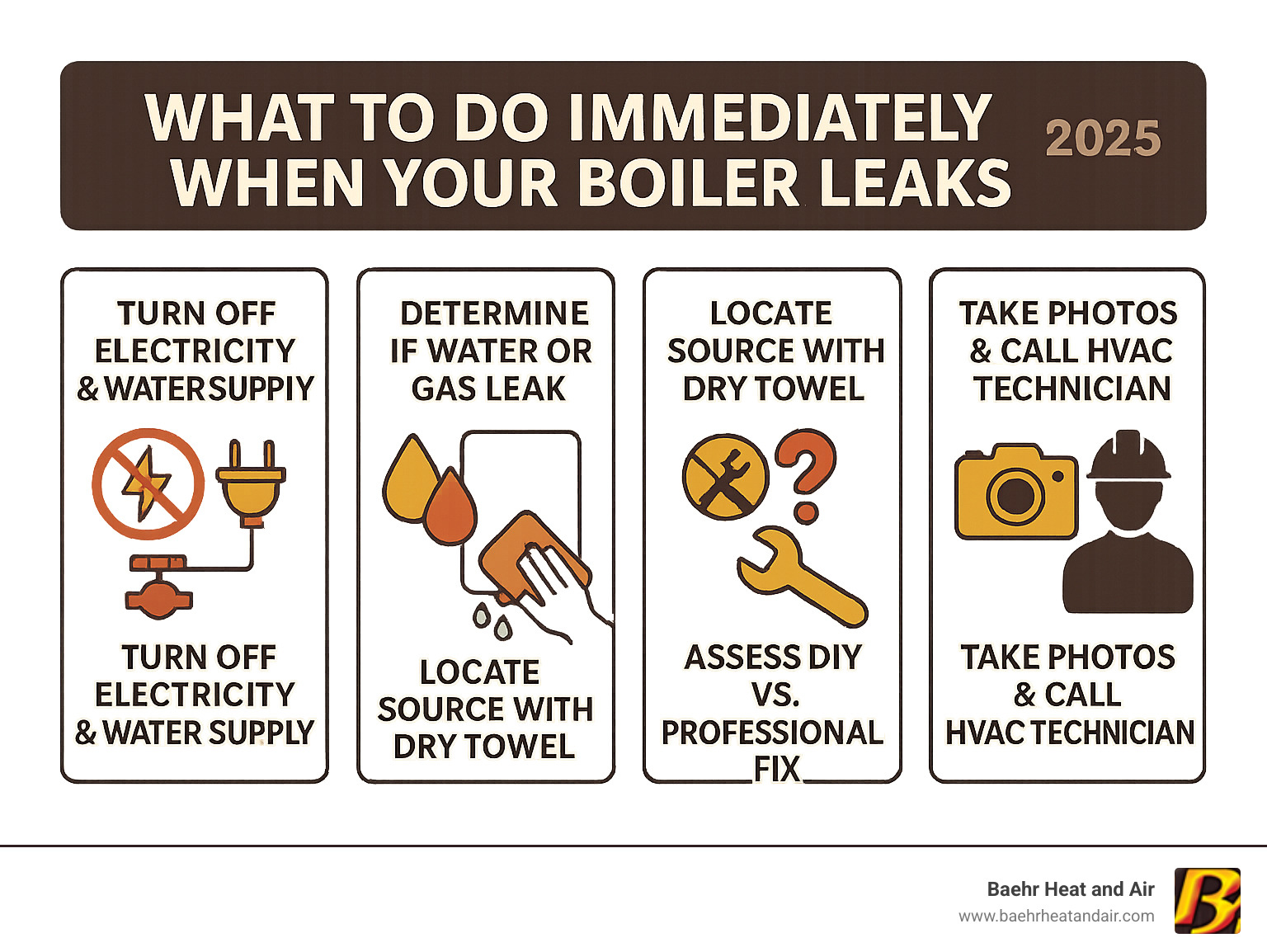
- Turn off the electricity to your boiler immediately.
- Shut off the water supply to prevent further damage.
- Check if it's water or gas - gas leaks require quick services.
- Locate the source using a dry towel to trace the leak.
- Call a professional for anything beyond simple fixes.
Ignoring a boiler leak can reduce your system's efficiency by 10% and lead to costly damage. A small drip can cause electrical problems, structural water damage, and mold growth in your home.
Most boiler leaks come from common issues like high pressure, corroded pipes, or worn seals. While you might manage a simple fix like tightening a loose fitting, most leaks require professional attention, especially those involving the heat exchanger or other internal components.
The good news is that many leaks are preventable with proper maintenance. Annual servicing by a qualified technician can catch small problems before they become expensive repairs.
First Steps: What to Do Immediately When Your Boiler Leaks
Finding a boiler water leak is stressful, but taking the right steps immediately protects your family and property. Quick action can prevent a small problem from becoming a disaster.
First, ensure safety by turning off the electricity to your boiler. Water and electricity are a dangerous mix. Go to your electrical panel and flip the circuit breaker for the boiler. If you're unsure which one it is, turn off the main breaker to be safe.
Next, shut off the water supply to stop feeding the leak. Look for isolation valves on the pipes connected to your boiler—they usually have red or black handles. Turn them perpendicular to the pipe to stop the flow. If you can't find them, your home's main water shutoff valve will work.
Now, control the damage. Use buckets and towels to catch drips and soak up any puddles. Drying the area thoroughly will make it easier to pinpoint the source of the leak.
Why Acting Fast Matters
Don't postpone fixing a small drip. Boiler water leaks cause problems that cost far more than the original repair.
- Electrical Dangers: Water can cause short circuits, damage expensive components, and create fire hazards by seeping into unseen electrical connections.
- Structural Damage: A small puddle can seep into flooring, weaken wooden supports, and damage drywall, leading to major home repairs.
- Mold Growth: The damp environment is a perfect breeding ground for mold, which poses health risks and requires expensive professional remediation.
- Heating System Damage: Leaks can cause potential damage to your heating system, including corrosion, reduced efficiency, and complete breakdowns. A leaking boiler works harder to maintain pressure, driving up energy bills by around 10%.
Is it a Water Leak or a Gas Leak?
Before investigating, you must know if you have a water or gas leak, as they require different responses.
Water leak signs are usually obvious: puddles, dripping sounds, or damp patches. A consistently dropping pressure gauge is another key indicator.
Gas leak signs demand immediate evacuation. The most recognizable sign is a rotten egg smell, which is added to natural gas for detection. You might also hear a hissing sound.
Other red flags for a gas leak include a pilot light that burns yellow or orange instead of blue, black stains around the boiler, or your carbon monoxide detector going off. These all require immediate professional attention.
If you suspect a gas leak, do not flip switches, use your phone, or light anything. Open windows, get everyone out of the house, and call your gas service from a safe distance. Only return when a professional says it is safe.
Diagnosing the Cause of Your Boiler Water Leak
Once you've handled immediate safety concerns, it's time to find where the boiler water leak is coming from. A systematic approach will help you pinpoint the source.
Getting Started with Your Investigation
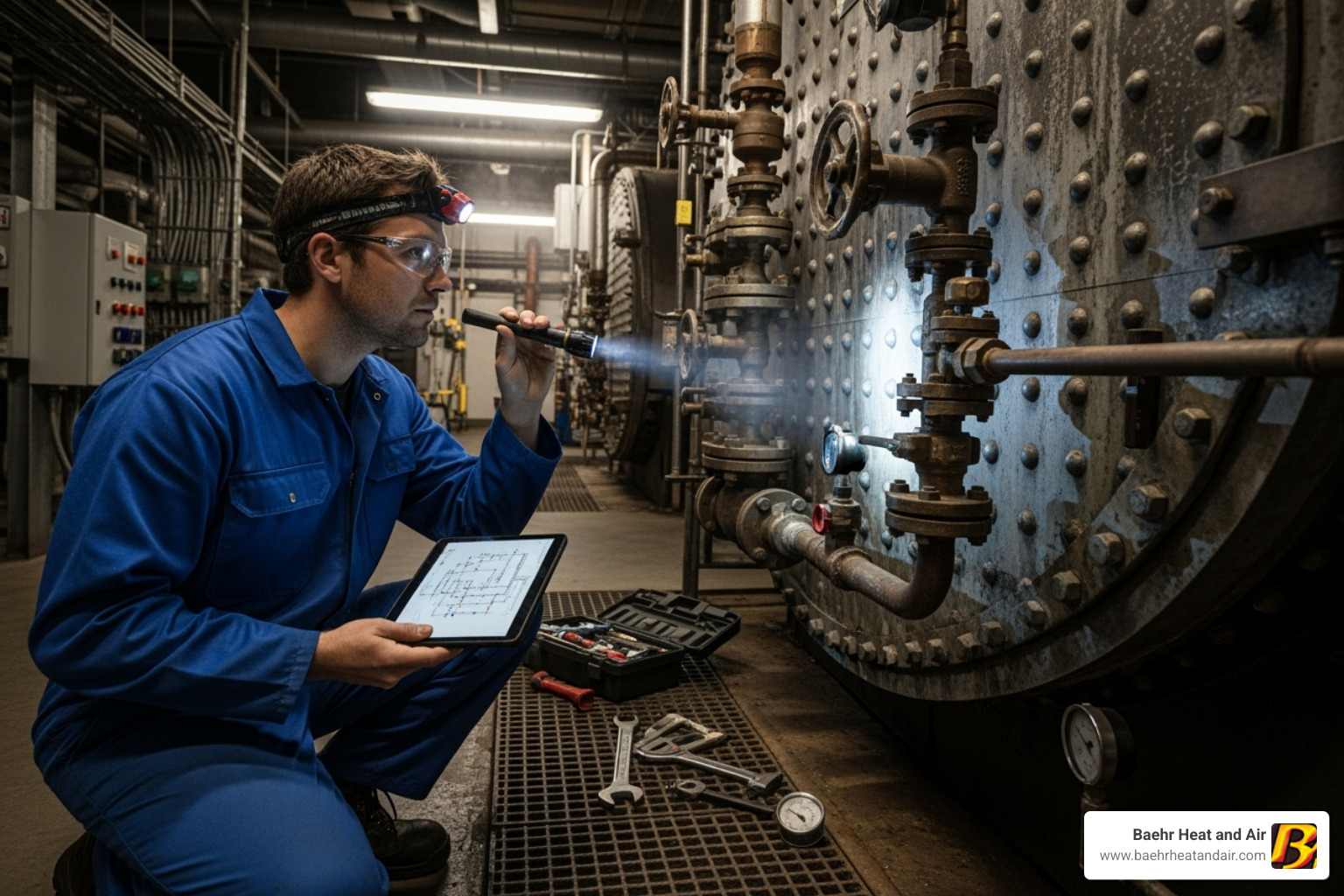
First, ensure the boiler is cool and the power is off. Start your search low and work your way up, as water follows gravity. Look for puddles or water trails on the floor, which can lead you to a leak higher up on the unit. Use a dry towel to find slow drips by dabbing it along pipes, joints, and connections. This method reveals damp spots that aren't forming visible puddles.
Key Areas to Inspect Carefully
- Pipe Joints and Fittings: Constant expansion and contraction can loosen connections or crack seals. Use your towel to check every joint.
- Valves: Pay special attention to the pressure relief valve (PRV). A drip here often signals a system-wide high-pressure problem rather than a faulty valve.
- Boiler Components: Inspect the boiler body for cracks or corrosion, the circulation pump for seal leaks, and the condensate pipe (on condensing boilers) for blockages.
- Radiators and Valves: The leak could originate from a radiator or valve elsewhere in your home, causing pressure loss that appears at the boiler.
Common Culprits Behind a Boiler Water Leak
Understanding the cause of a boiler water leak helps determine the right fix.
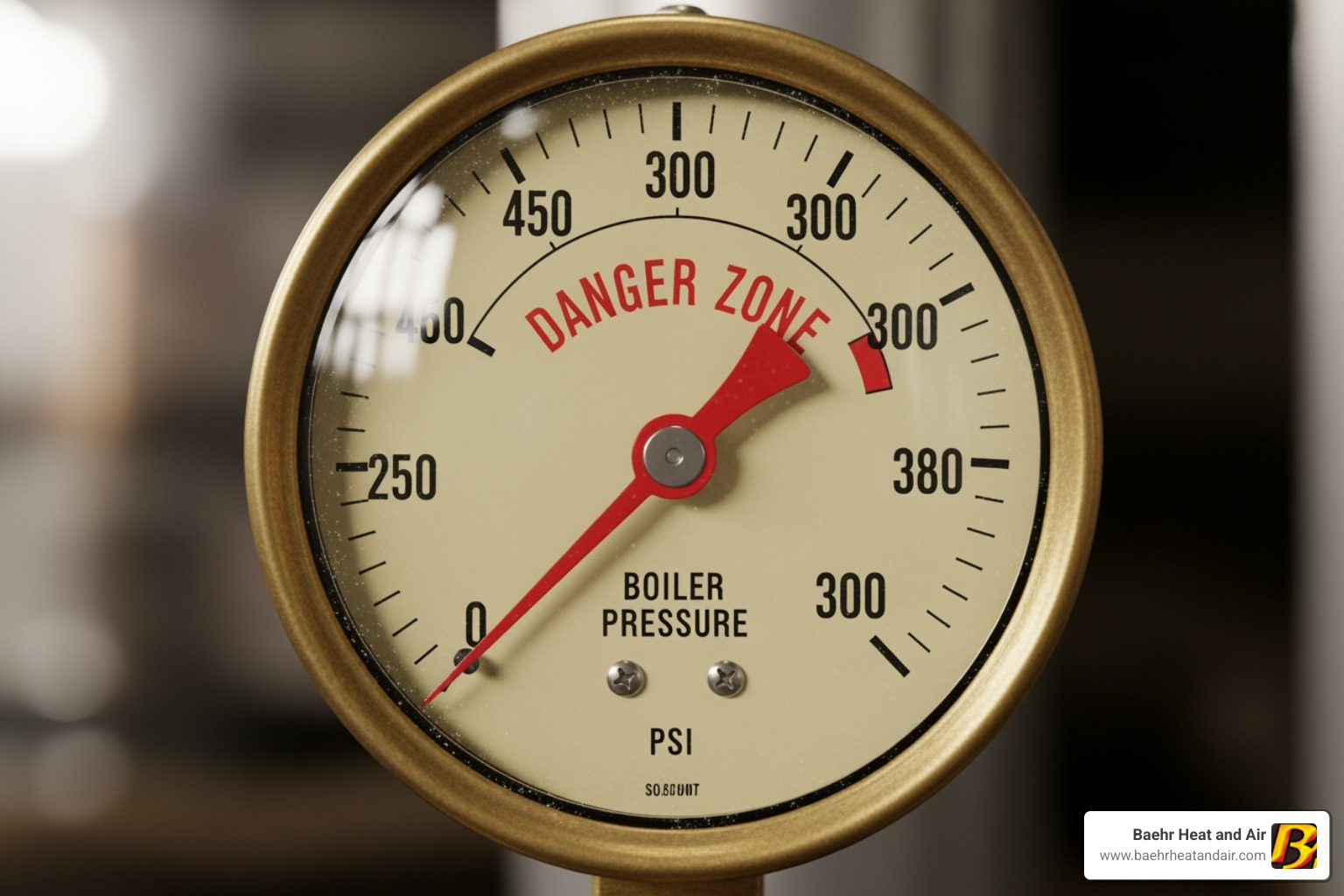
- High Boiler Pressure: Your boiler pressure should be between 1 and 1.5 bar. If it's too high, the PRV will release water to protect the system. A consistently dripping PRV could mean the real issue is a faulty expansion vessel or a filling loop left open.
- Corrosion: Common in older systems, rust weakens metal pipes, the tank, and connections. It can also break down the rubber seals around poorly sealed pipe joints.
- Worn-Out Seals: Over years of temperature changes, rubber seals and gaskets can crack or degrade, allowing water to escape.
- Loose Connections: Vibrations and temperature cycles can loosen pipe connections, creating small leaks that are often easy to fix.
- Faulty Heat Exchanger: This is a more serious problem. Cracks in this critical component, which is under constant thermal stress, require a significant repair.
- Age and Wear: Boilers typically last 15-20 years. As they age, components degrade, making leaks more likely.
Identifying Hidden Leaks in Steam Boiler Systems
Steam boilers, common in older homes, can have hidden leaks that don't create obvious puddles. The biggest sign is constantly needing to add water to the system. Other signs include uneven heating, mysterious damp spots on walls or ceilings, and warped floorboards from leaking return pipes.
Locating hidden steam leaks requires professional expertise. If you notice these signs, call a professional to prevent costly water damage. These signs indicate your boiler needs professional attention before small problems escalate.
To Fix or To Call: DIY Solutions vs. Professional Repairs
Once you've found a boiler water leak, you need to decide: can you fix it yourself, or should you call an expert? The answer depends on the leak's location, its severity, and your comfort level with home repairs. While some minor issues are DIY-friendly, others absolutely require a professional. Making the wrong choice can turn a quick fix into a costly disaster.
Financially, professional repairs are usually much cheaper than replacing an entire system or fixing extensive water damage. Since the cost of a new boiler can be substantial and the average unit lasts 15-20 years, investing in proper repairs makes sense. The key is knowing when to DIY and when to call a pro from the start.
Simple DIY Fixes for a Minor Boiler Water Leak
For a small, clearly identifiable leak, you might be able to handle it yourself. Always turn off the power and water supply to your boiler before attempting any repairs.
- Tightening loose fittings: Pipe joints can loosen over time. If you see a drip from a connection, try gently tightening it with a wrench. Be careful not to overtighten, as this can strip threads or crack the fitting.
- Checking the filling loop: If high pressure is causing the pressure relief valve to drip, check that the filling loop isn't stuck slightly open, as this will continuously add water and pressure to the system.
- Bleeding radiators: This can help reduce high pressure by releasing trapped air and a small amount of water from the system. You'll need a radiator key and a towel.
- Using leak sealer additives: These products circulate through your system and can seal very minor, hard-to-find leaks. However, they are a temporary band-aid, not a permanent solution.
These are temporary or minor fixes. If the leak continues or you're unsure of the cause, it's time to call a professional. Don't ignore the signs that your boiler needs professional repair to save yourself money and hassle.
When to Call a Professional HVAC Technician
Some situations are too complex or dangerous for a DIY approach. Call a professional if you encounter:
- Persistent leaks that don't stop after your attempts to fix them.
- Major component failures, such as a leaking heat exchanger or a crack in the boiler body.
- No heat or hot water, which indicates a critical system failure.
- Any gas smell or suspected gas leak. Evacuate immediately and call for help.
- Extensive corrosion throughout the system, which suggests it may be nearing the end of its life.
- If you're not comfortable with the repair. Your safety is more important than saving on a service call.
Choosing Between a Plumber and HVAC Technician
For a boiler water leak, it's important to call the right expert. Plumbers typically handle external pipes, like water supply lines. An HVAC technician is your go-to for anything involving the boiler's internal workings, pressure, gas supply, or heating components. For most leaks involving the boiler unit itself, an HVAC technician is the best choice.
At Baehr Heat and Air, our technicians are specifically trained in boiler systems and can safely diagnose and repair complex issues. We understand that a boiler water leak can be stressful, which is why we focus on clear communication and reliable solutions that keep your home comfortable.
Prevention is Better Than a Puddle: Maintaining Your Boiler
No one wants to deal with a boiler water leak on a cold morning. The good news is that most leaks are preventable with proactive care. Regular maintenance not only prevents leaks but also keeps your energy bills lower and extends your boiler's life.
Annual servicing is the most important preventative step. During a professional service, a technician inspects for wear and corrosion, tests pressure levels, and cleans components, catching small issues early. This is also often required to keep your manufacturer's warranty valid.
Between service visits, you can take a few simple steps:
- Perform regular pressure checks. Your boiler's pressure gauge should be in the green zone, typically between 1 and 1.5 bar. Low pressure may indicate a hidden leak, while high pressure can cause other problems.
- Install a magnetic filter. This device protects your system by capturing rust and debris, preventing buildup in sensitive components and reducing the risk of corrosion-related leaks.
- Insulate pipes in unheated areas like basements. This reduces stress on joints from temperature changes, preventing leaks and improving efficiency.
- Keep the area around your boiler clear. This improves ventilation and makes it easier to spot drips or other issues early on.
Modern smart boiler controls can also provide early leak detection by monitoring performance and flagging unusual water usage, acting as a 24/7 watchdog for your system.
By following these preventative measures, you can avoid the stress of repairs and keep your home comfortable. For more comprehensive tips on keeping your boiler in top shape, check out our guide on essential boiler maintenance.
Key Preventative Maintenance Measures
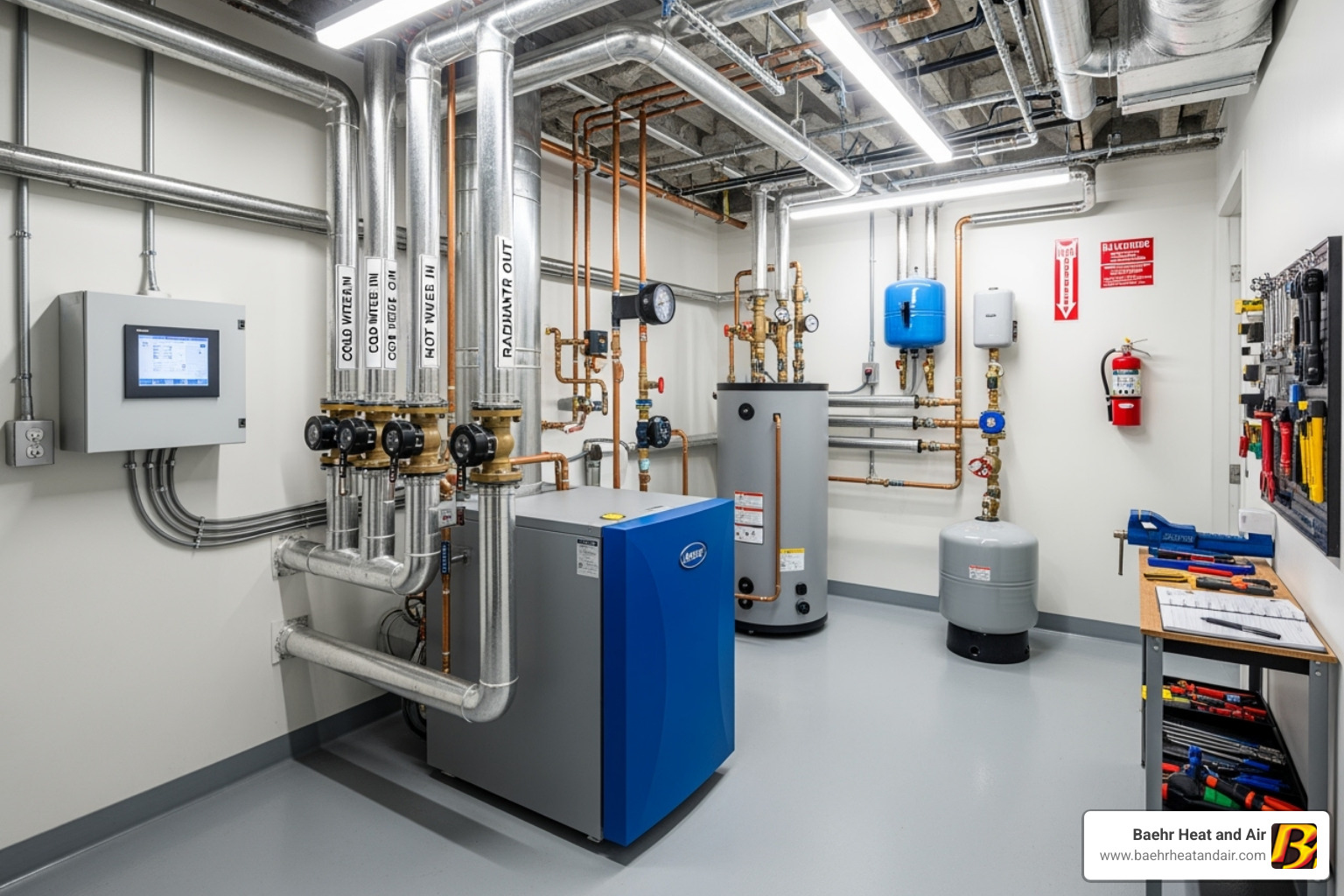
Proactive maintenance is the best defense against a boiler water leak. These key measures will keep your boiler running smoothly:
- Annual Professional Servicing: Schedule a service before the heating season. A technician will perform a comprehensive check, cleaning components and looking for wear to catch problems while they are small and inexpensive to fix.
- Monthly Pressure Monitoring: Check your gauge monthly. Sudden drops or consistently high pressure signal potential problems that may require a professional.
- Water Quality Management: Use magnetic filters to prevent internal corrosion by removing rust and debris. This leads to a more efficient, longer-lasting boiler.
- Pipe Insulation: Insulate pipes in unheated areas to prevent stress on joints and improve system efficiency.
- Early Detection Systems: Smart controls monitor your boiler and can alert you to issues before they become visible leaks, saving you money on repairs.
Frequently Asked Questions about Boiler Leaks
Finding a boiler water leak brings up many questions. As experts serving Grass Valley, Nevada City, and North Auburn, we've answered them all. Here are the most common ones we hear.
Can I still use my boiler if it's leaking a small amount of water?
We strongly recommend turning off your boiler immediately, even for what seems like a tiny drip. A small leak can quickly become a major problem. Running a leaking boiler puts extra strain on already failing components, which can turn a minor repair into a major one. Most importantly, water and electricity are a dangerous combination. A leak can create serious safety hazards like electrical shorts or fire. It also wastes energy, driving up your utility bills.
How much does it typically cost to fix a leaking boiler?
The cost to fix a boiler water leak varies depending on the cause. Simple fixes, like tightening a loose connection or replacing a worn seal, are relatively affordable. More complex issues, such as a failed heat exchanger or widespread corrosion, are more expensive and require specialized parts and labor. The best approach is a professional assessment. We can diagnose the issue and provide a clear, upfront estimate, helping you decide whether to repair or replace an older system.
How often should my boiler be serviced to prevent leaks?
To prevent leaks and breakdowns, we recommend annual boiler servicing. During a service, our technicians perform a comprehensive check of all seals, pressure levels, and components to spot early signs of corrosion or failure. Many manufacturers actually require annual servicing to keep your warranty valid, so skipping it could be a costly mistake. Homeowners who get annual servicing rarely face major leak emergencies because we catch and fix small issues during routine maintenance. We recommend scheduling your service in late summer or early fall to address any issues before the cold weather arrives.
Your Local Experts in Boiler Repair
Finding a boiler water leak is overwhelming, but it's a clear sign that your home's comfort system needs fast attention. The good news is that with the right professional help, most boiler leaks can be resolved before they turn into major headaches.
We've walked you through the essential steps, from safety shutoffs and diagnosis to deciding between DIY fixes and professional repairs. While tightening a fitting might solve a minor drip, most boiler water leak issues require the expertise of qualified technicians who understand the complexities of these systems.
At Baehr Heat and Air, we know that boiler problems never happen at convenient times. That's why our team focuses on delivering an outstanding, clear customer experience with solutions that work. We've seen every type of boiler issue, and we approach each one with a commitment to quality, trust, and saving you money for lasting home comfort.
Our trustworthy technicians don't just fix the immediate problem; we help you understand the cause and how to prevent it from happening again. We're here to be your long-term partner in home comfort.
If you're dealing with a boiler water leak in Grass Valley, Nevada City, North Auburn, or the surrounding areas, don't let a small drip become a big disaster. Contact our expert team for reliable boiler repair today! We'll get your heating system back to keeping you warm and comfortable.
Ready to breathe easy?
Schedule service or request a free estimate. Honest assessments and upfront pricing on every visit across Nevada County.